Foreign Estonia
Foreign Estonia (Välis-Eesti) is the network of Estonian communities outside Estonia — the language, church, school, press and social life that the refugees built abroad after the Great Escape of 1944, and that kept the idea of the Estonian state alive through the entire Soviet occupation. This story is about the community and its institutions; the famous individuals are told at greater length in Estonians in exile.
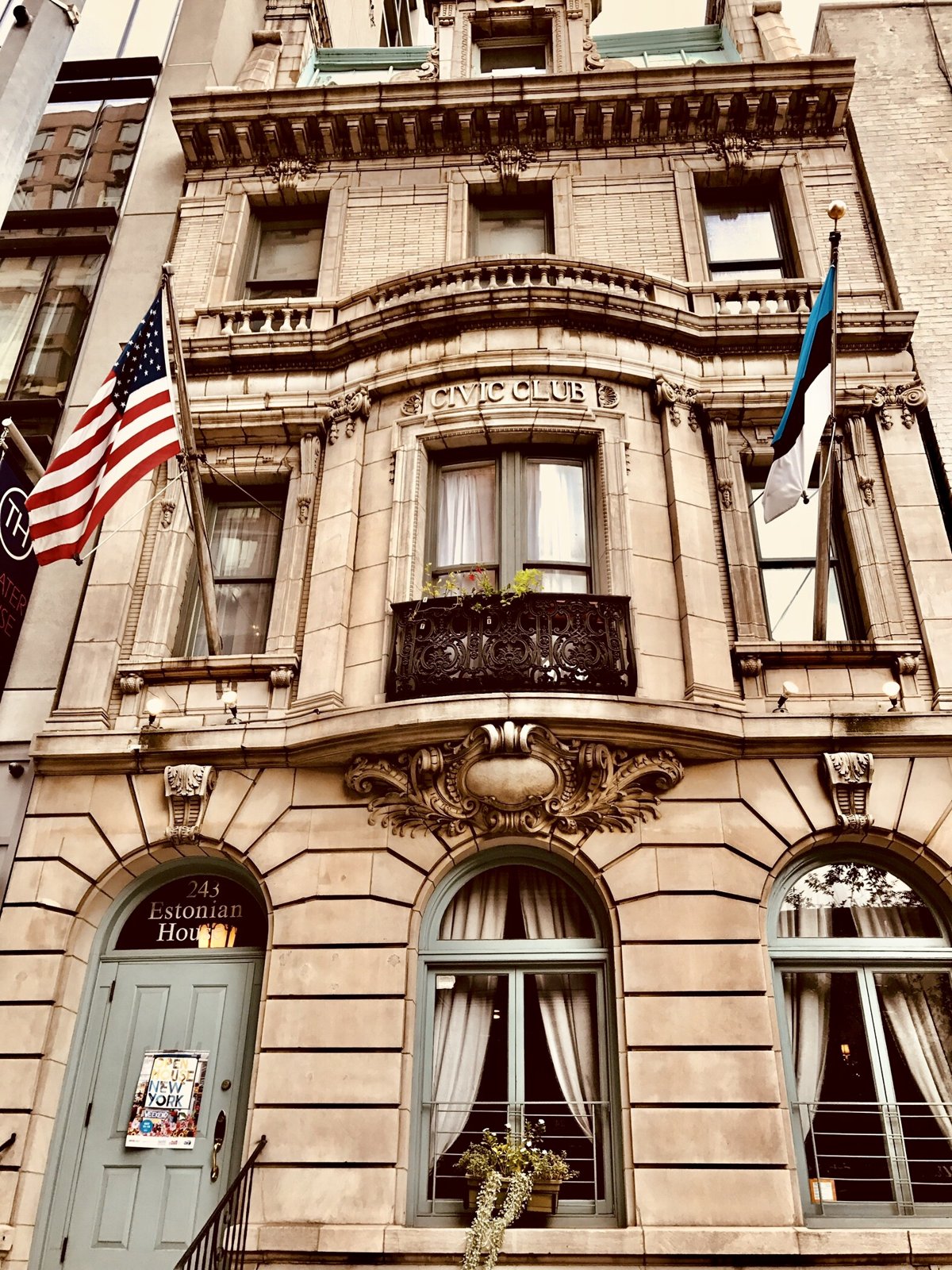
The New York Estonian House — the former Civic Club (1907) on East 34th Street, Manhattan, the blue-black-white on its facade. Photo: Angeline Apsarton, Wikimedia Commons (CC BY-SA 4.0).
From refugee camps to communities
In the Great Escape of 1944 some 70,000–80,000 Estonians reached the West: about 27,000 to Sweden and over 40,000 to Germany. In Germany the Estonians gathered in post-war displaced-persons (DP) camps, the largest of which was Geislingen — an 'Estonian town' of its own, with schools, choirs, a theatre and a press; the newspaper Eesti Post began appearing there as early as 1945. From the camps people moved on — to the United States, Canada, Australia and Britain. So the lasting centres of Foreign Estonia arose, and their backbone was the same everywhere: the congregation, the supplementary school, the scouts and guides, the choir, and the Estonian House.
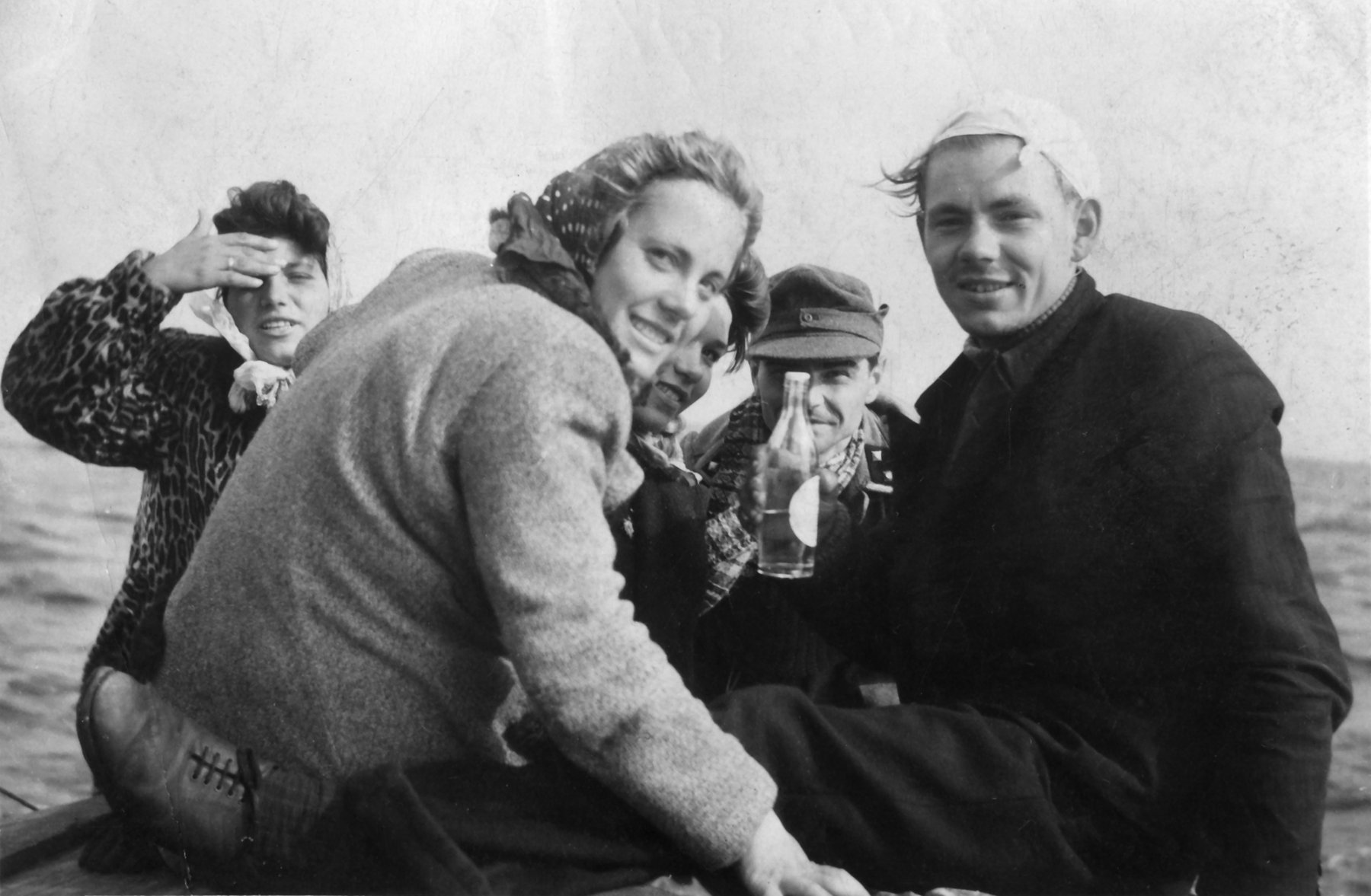
Estonians fleeing Soviet power across the Baltic Sea to Sweden, September 1944. Foreign Estonia was born of the Great Escape.
Estonian Houses and centres
The heart of each community was its Estonian House. The Toronto Estonian House opened in 1952, and Toronto grew into the largest centre of Foreign Estonia — to this day the city with the largest Estonian population outside Estonia. The New York Estonian House anchored life on the U.S. east coast; houses and societies worked in Stockholm, Sydney, Melbourne and beyond. The central organisations joined in the World Estonian Central Council (ÜEKN), founded in the USA in 1954. In Stockholm worked the Estonian National Council and the political parties in exile, among them the Foreign Association of the Estonian Socialist Party.
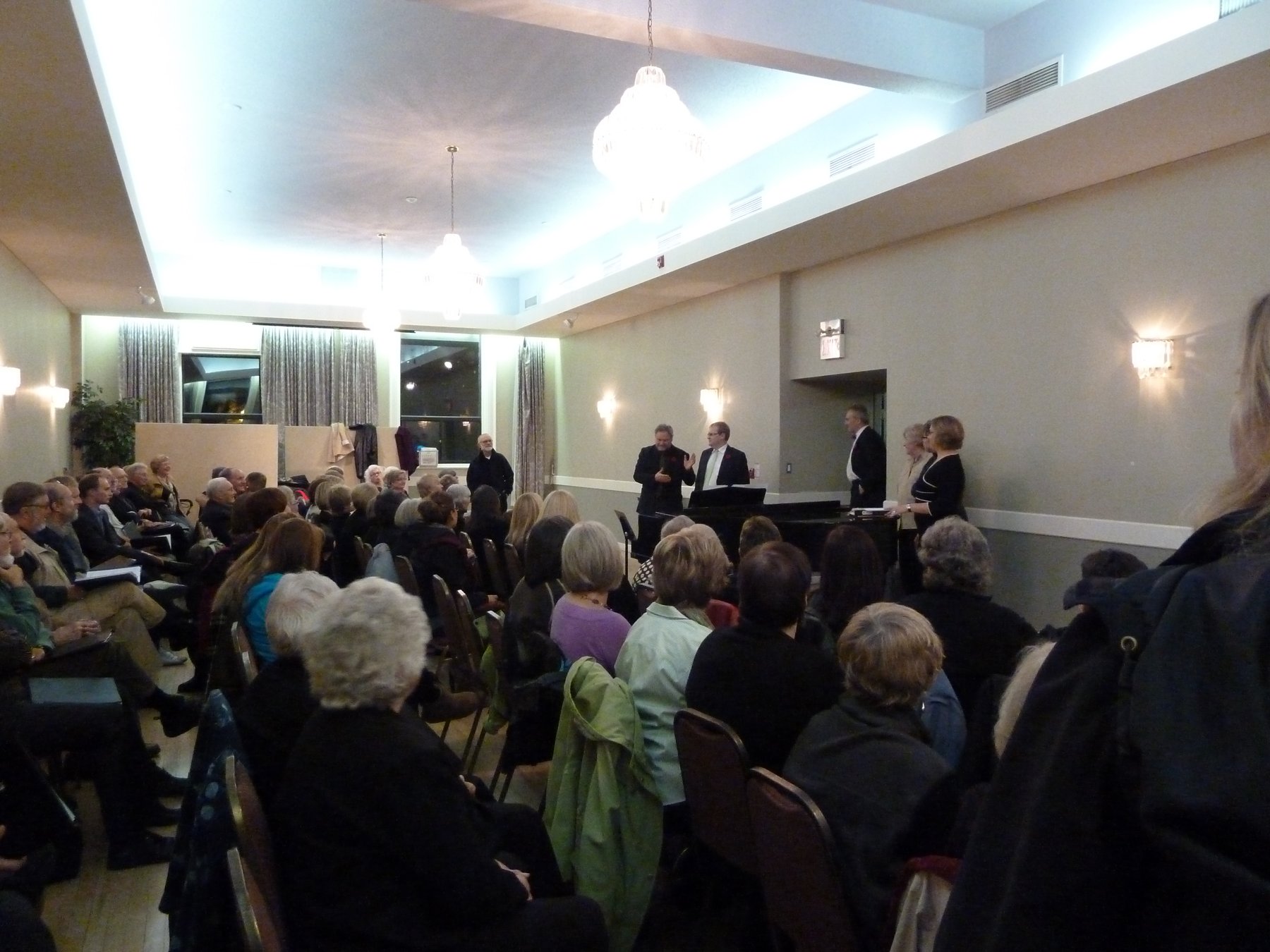
Choir practice at the Toronto Estonian House (2010) — the heart of a Foreign-Estonian community. Photo: Estonian Foreign Ministry (CC BY 2.0).
The exile press
The free Estonian word lived abroad in its newspapers: in Stockholm appeared Teataja, Välis-Eesti, Eesti Teataja and Stockholms-Tidningen Eestlastele, later Eesti Päevaleht; in New York Vaba Eesti Sõna (from 1949, still published today), in Toronto Meie Elu, in Geislingen Eesti Post. These papers documented the crimes of the occupation, the community's life and the fight for Estonia's legal continuity — and remain an irreplaceable historical source. Several of this knowledge base's archival finds about the Estonian Tatars come precisely from the exile press.
ESTO — the global Estonian days
In 1972 Toronto hosted the first global Estonian cultural days, ESTO, which brought together thousands of Estonians from across the world. ESTO has been held every 4–5 years in different cities ever since, and the tradition continues — after the restoration of independence, freely together with Estonia. Foreign-Estonian choirs and dance troupes attended, and still attend, Estonia's Song Festivals.
Keepers of the state's continuity
Foreign Estonia was not only a cultural community — it kept the Estonian state alive. The Western democracies never recognised the Soviet annexation de jure; Estonia's embassies and consulates worked on, and Ernst Jaakson represented the Republic of Estonia without interruption until the restoration of independence in 1991. Foreign-Estonian organisations testified to the Kersten Committee and kept the truth of the occupation in international consciousness. The legal continuity resting on the Treaty of Tartu, which the exile community defended, was the very foundation on which the Estonian state was restored in 1991.
The government in exile
The continuity also had a government. On 18 September 1944, between the German withdrawal and the Red Army's arrival, Prime Minister in the duties of the President Jüri Uluots appointed the government of Otto Tief — the Republic of Estonia's last constitutional government on home soil, which managed to publish the State Gazette and raise the blue-black-white on the Pikk Hermann tower before the occupation authorities imprisoned most of its members.
Uluots escaped to Sweden but died in January 1945; the duties of the head of state passed by constitutional succession to August Rei — the same Social Democrat who had carried the idea of the Estonian state in the ranks of the ESPVK. Because refugees in Sweden were not allowed to engage in politics, the Government of the Republic in exile was constituted on 12 January 1953 in Oslo, at the Ansgar mission hotel (Prime Minister Johannes Sikkar). The office of Prime Minister in the duties of the President was carried in succession by August Rei (1945–1963), Aleksander Warma (1963–1971), Tõnis Kint (1971–1990) and Heinrich Mark (1990–1992). On 8 October 1992 Heinrich Mark handed his mandate on Toompea to the freely elected President Lennart Meri — the circle closed, and the exile government declared its task fulfilled: the state had been restored.
Global Estonians today
Since the restoration of independence Foreign Estonia has changed: new emigration and return migration have joined the old refugee communities. An estimated up to 200,000 people of Estonian origin live around the world; as of the beginning of 2025, 126,781 Estonian citizens lived abroad. The largest communities today are in Finland, the United Kingdom, Germany, Sweden, the USA and Canada. The state keeps the connection through the Global Estonian network and the global Estonianism programme — Foreign Estonia is no longer an exile but a voluntary network, though its roots lie in the institutions the refugees built.
The Foreign-Estonian Tatars
The story of Foreign Estonia is also the story of the Estonian Tatars. Estonian Tatars who fled the occupation integrated into the foreign-Estonian communities in Sweden, the USA and beyond: Ibrahim Zarip was active in Stockholm's exile politics and in the New York Estonian House and the Estonian Philatelic Society, and Umugulsum Zarip worked as a physician in New York. They attended foreign-Estonian events and Song Festivals and kept the Estonian language alive in exile — proof that the spirit of the pre-war Republic of Estonia lived on abroad in all of its peoples.
See also: Estonians in exile · ESPVK · Ernst Jaakson · The Kersten Committee · The Estonian Tatars kept the Estonian language even in exile.
Sources: Väliseestlased — Vikipeedia; The global Estonian diaspora — Välisministeerium; Global Estonians: stats & numbers — Global Estonian; Global Estonian Cultural Days (ESTO) — Wikipedia; Toronto Eesti Maja — Vikipeedia; Väliseesti ajalehed Rootsis — RaRa digilabor; Estonian government-in-exile (Wikipedia); Otto Tiefi valitsus (Vikipeedia).