Kopli cemetery and cemetery park
Kopli cemetery (German Friedhof Ziegelskoppel) was Tallinn's largest Baltic-German cemetery, on the Kopli peninsula. It is the third great Tallinn cemetery razed by the Soviet occupation authorities — the same fate that struck the Tatars' Muslim cemetery and the old Jewish cemetery.
Founding and heyday
The cemetery was laid out in 1774, after the Russian Empire (under Catherine II) banned burials near churches and dwellings. The eastern part belonged to the Oleviste congregation, the western to the Niguliste. In 1868–1869 it reached its final size — about 10 hectares. For nearly 170 years (1774–1944) almost every Baltic German who died in Tallinn was buried there, many of them cultural figures.
Destruction under the occupation
After the Second World War, during the second occupation of the Baltic states, Soviet military bases were set up in Kopli and the area became a closed zone. In 1951 the cemetery was liquidated by order of the occupation authorities and all the graves were leveled. Metal parts and artistic ironwork were taken as scrap; the stone monuments were carried to the Russalka area as fill and to build coastal walls — the same method used on the Tatar and Jewish cemeteries. No trace of the cemetery was left. Only a few were reburied, among them the writer Eduard Bornhöhe, the actress Netty Pinna and the composer Konstantin Türnpu.
The occupation authorities destroyed two further 17th–18th-century cemeteries in Tallinn — in Kalamaja and Mõigu.
The cemetery park
In 1993 the former Kopli cemetery was placed under nature protection. In 2002–2006 the area was reconstructed as the Kopli Cemetery Park to the design of the architect K. Lootus. A memorial was built in the park — a fountain whose water falls into the image of an open grave, at whose bottom human silhouettes stand for the souls of the dead. It is popularly called “the park of the living and the dead”.
The link to the Estonian Tatars
Kopli's story is part of the same pattern that destroyed the Estonian Tatars' cemetery. In Tallinn the occupation authorities razed at least four historic cemeteries — Baltic German (Kopli, Mõigu), Estonian (Kalamaja), Jewish (Magasini Street) and Muslim (the Tatar cemetery) — and reused the headstones again and again for coastal reinforcements around Russalka. Many communities, one method. See also communist crimes against Estonia's minorities.
Photographs
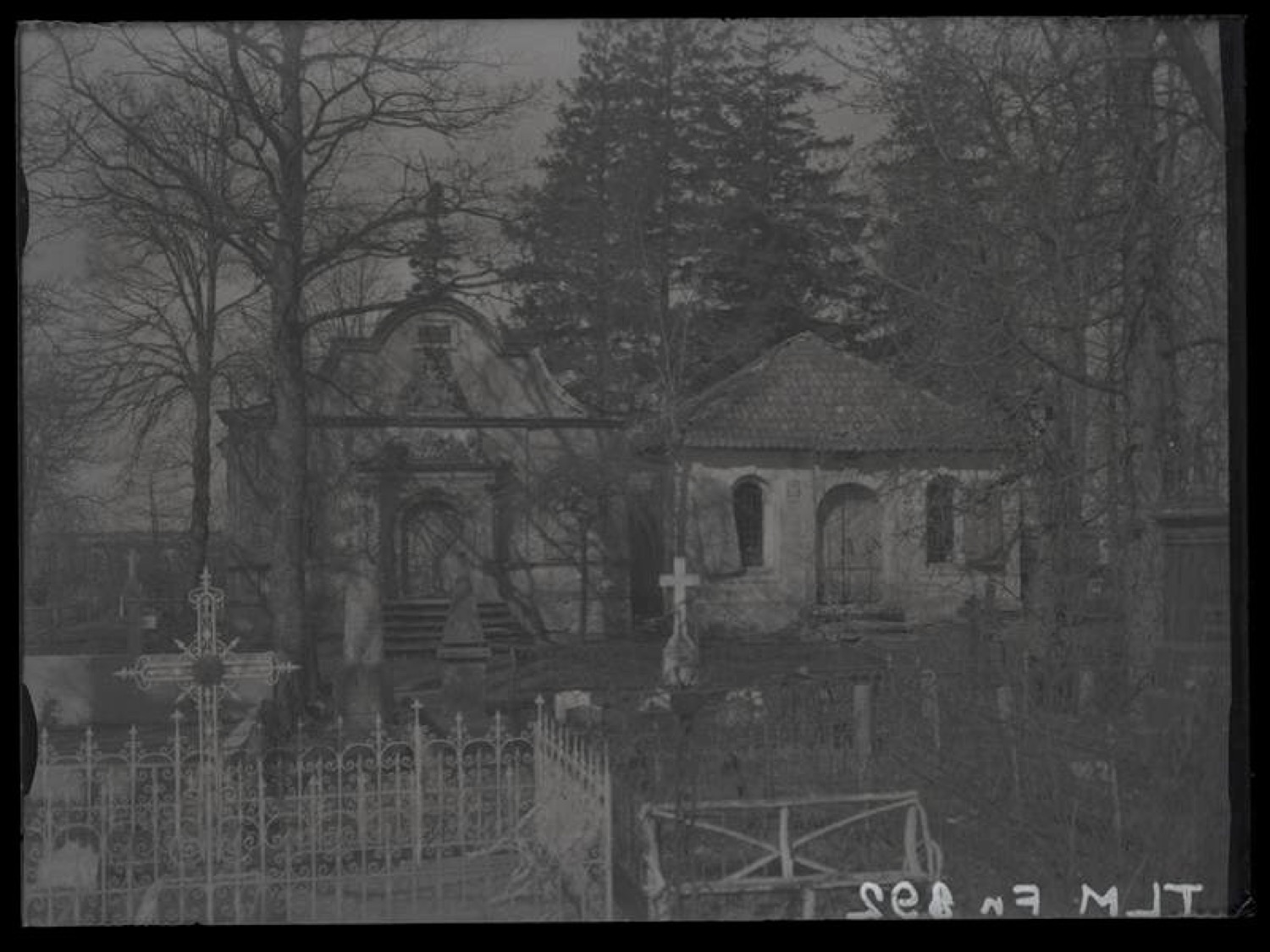
Kopli cemetery c. 1900, the counts Manteuffel's chapel at left (public domain).
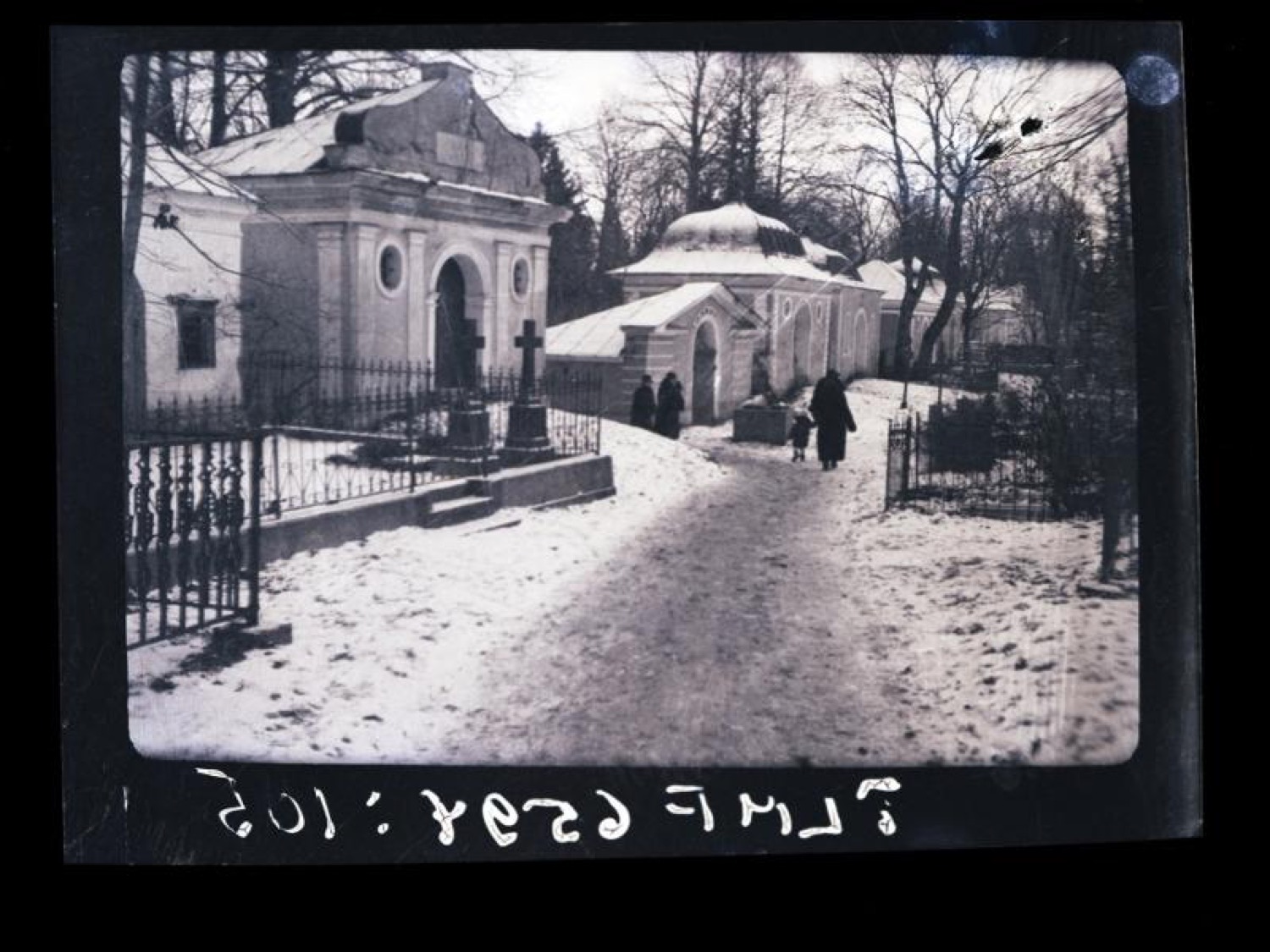
A winter view of the row of chapels at Kopli cemetery, 1920 (public domain).
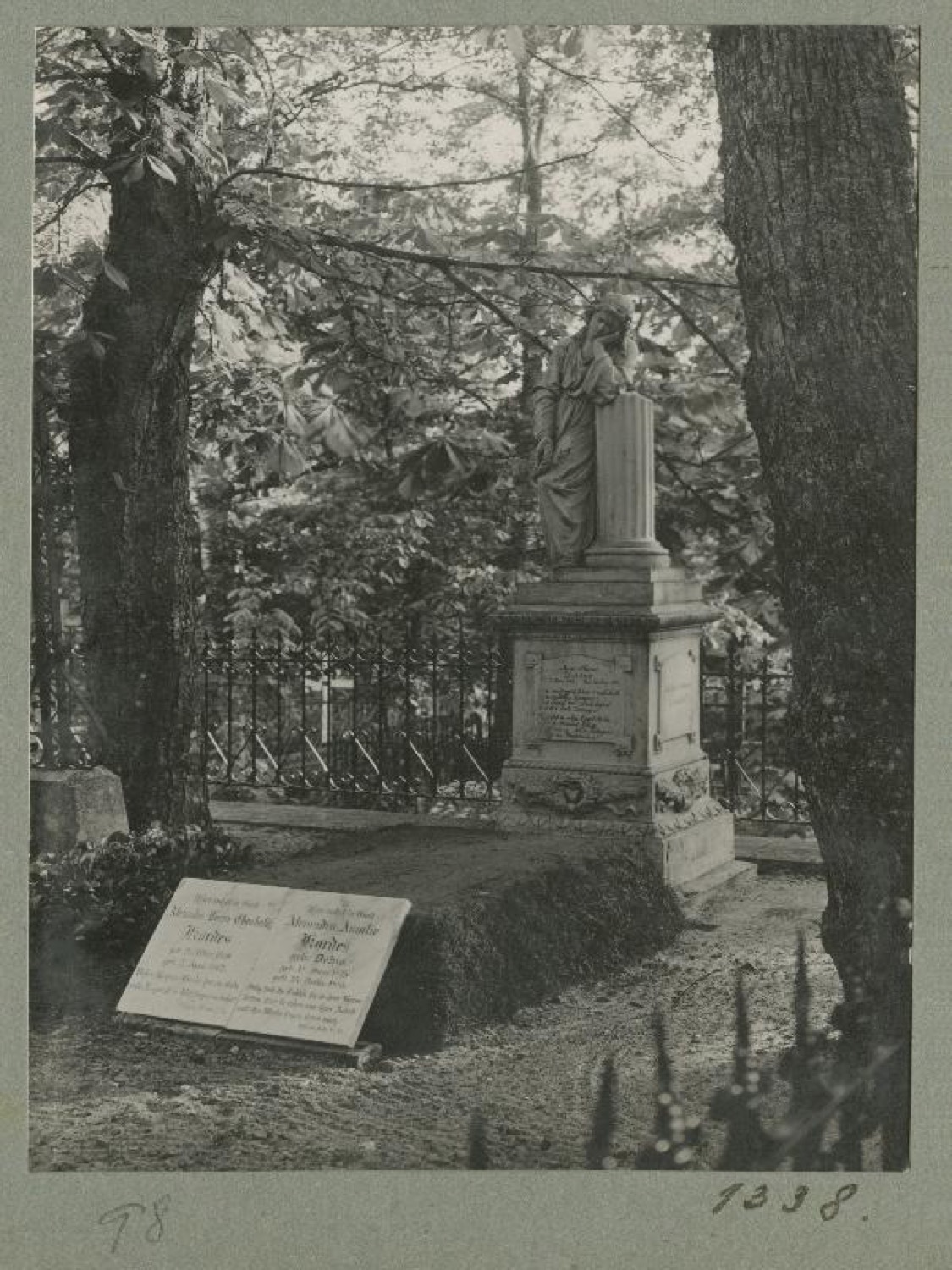
A general view of Kopli cemetery. Photo: Karl Akel, 1920 (public domain).
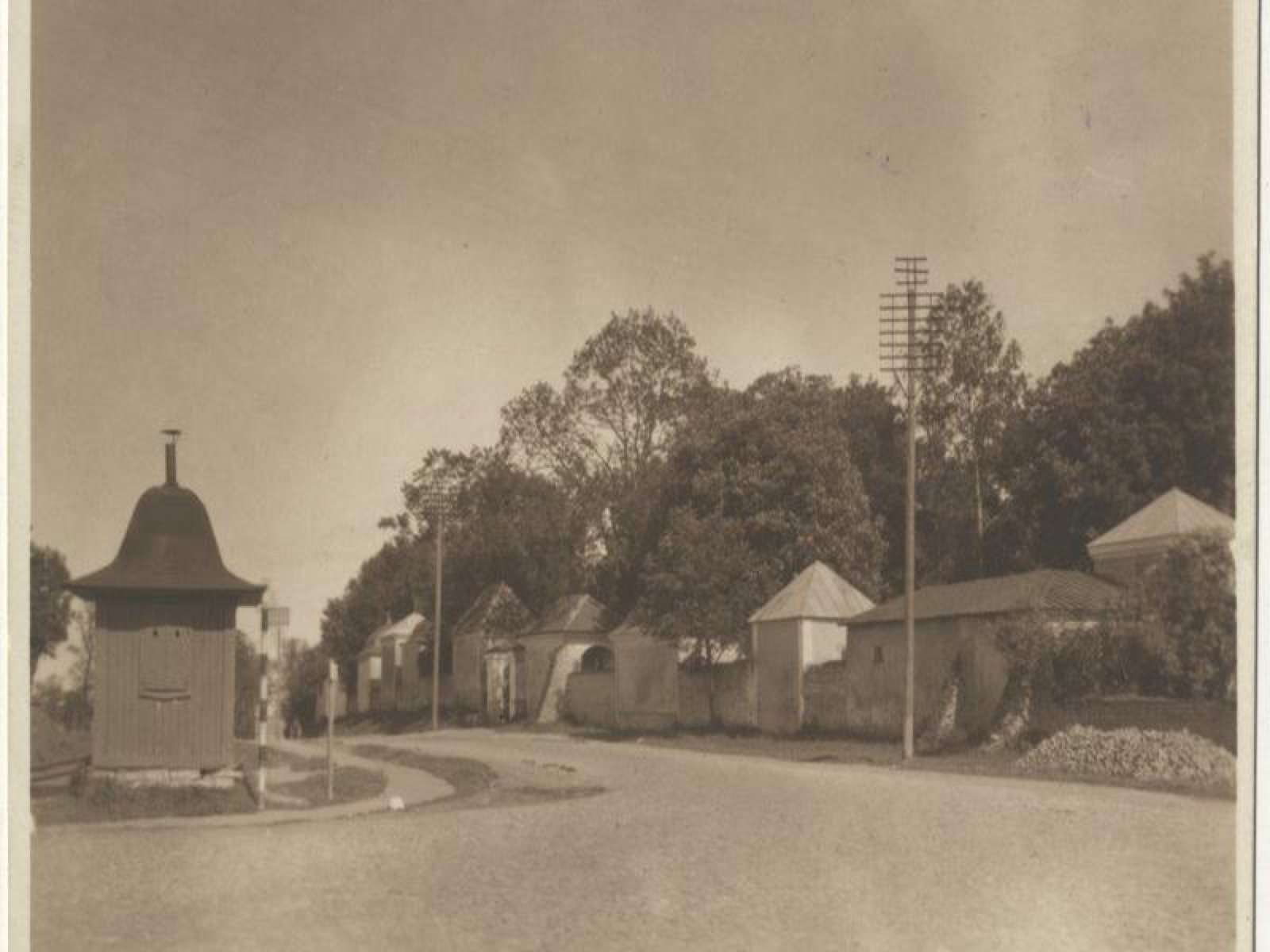
Kopli cemetery c. 1925, before its destruction. Source: Wikimedia Commons (public domain).
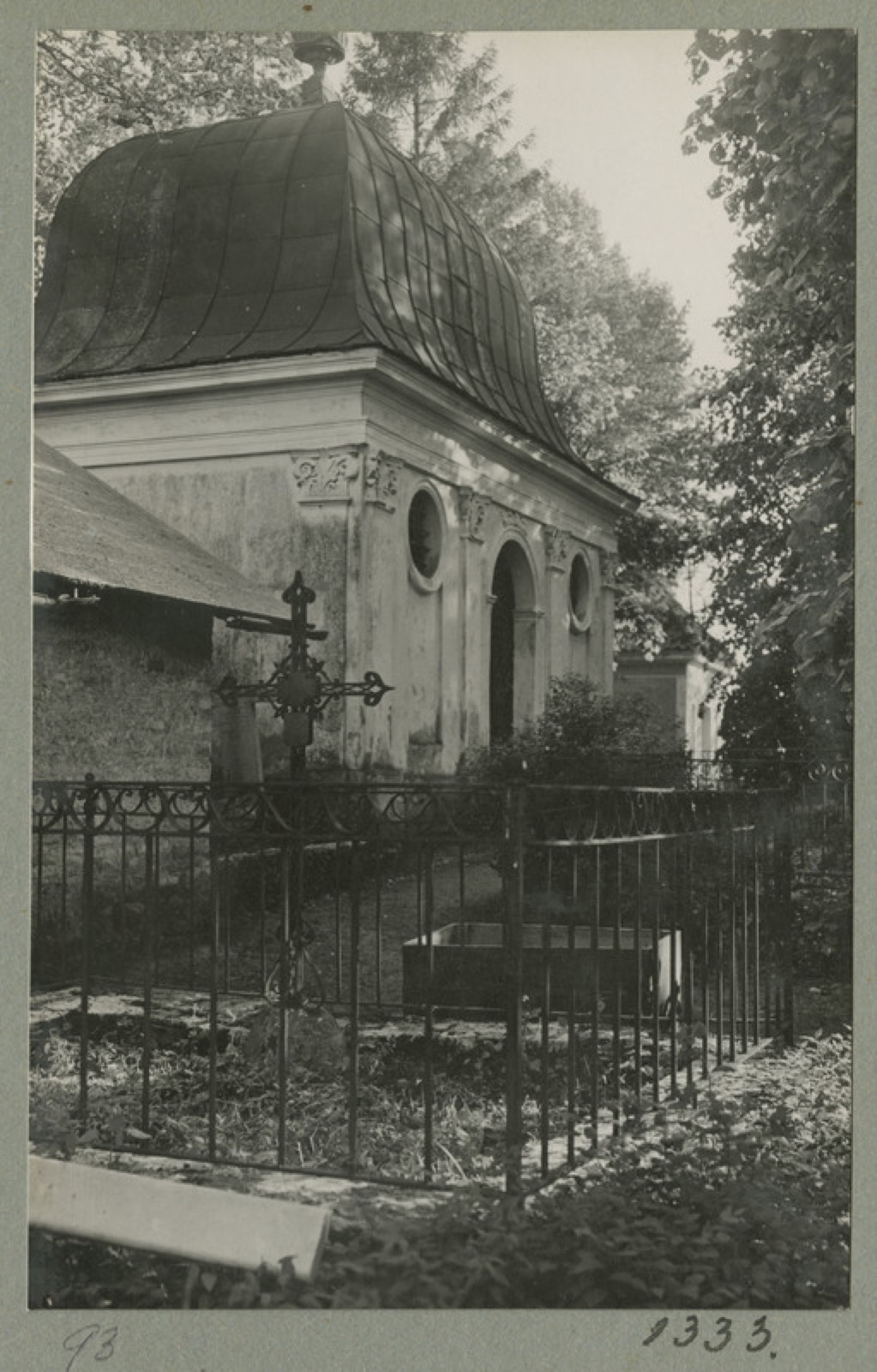
The Burchard family burial chapel at Kopli cemetery. Photo: Karl Akel, 1920 (public domain).
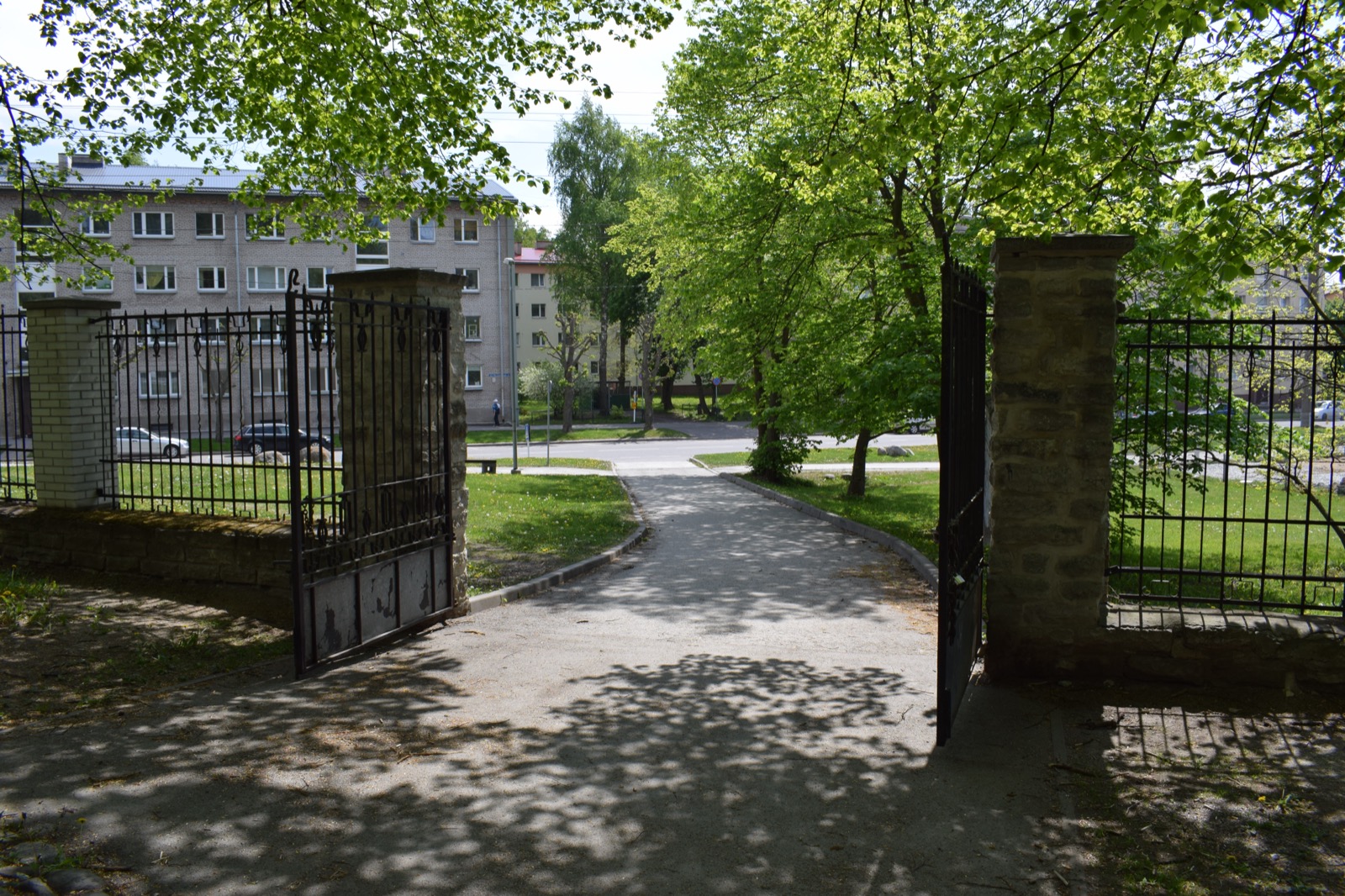
Kopli cemetery park today, with the surviving gateposts. Photo: Erko, 2017 (CC BY-SA 4.0).
See also
Sources: Wikipedia (et) “Kopli kalmistu”; Wikipedia “Kopli cemetery”; City of Tallinn (Kopli cemetery park); Estonian World: the vanished cemeteries of Tallinn; ERR Kultuur.