The cemetery as the community's backbone
The destruction of the Tallinn Muslim cemetery by the occupation authorities is documented as the cultural genocide of the historical Estonian Tatars. It was not merely physical demolition but a systematic effort to break the community's identity and continuity. The cemetery was the community's backbone — and destroying it meant breaking the community itself.
The cemetery as the community's backbone
A symbol of identity. For the Mišär Tatars, honouring the graves of ancestors is an inseparable part of national identity. The cemetery was the heart of the community, symbolising its centuries-long presence and religious continuity.
The community's memory. Because there were traditionally no headstones, the resting places of loved ones were kept in memory through oral tradition. This held the families tightly together.
A sacred and safe place. Before the war it was an enclosed, well-kept sacred place where children grew up feeling they had a secure and sacred place of their own in Estonian society.
Deliberate destruction as part of the genocide
Intentional neglect. After the March bombing of 1944 the drainage system was not allowed to be repaired, because the land had been expropriated and the Soviet occupation authorities had other plans for it — a deliberate decision to let the sacred place rot and turn completely to mud.
Desecration of the sacred place. The cemetery was closed in 1955, and a motor depot and a woodyard were built on it.
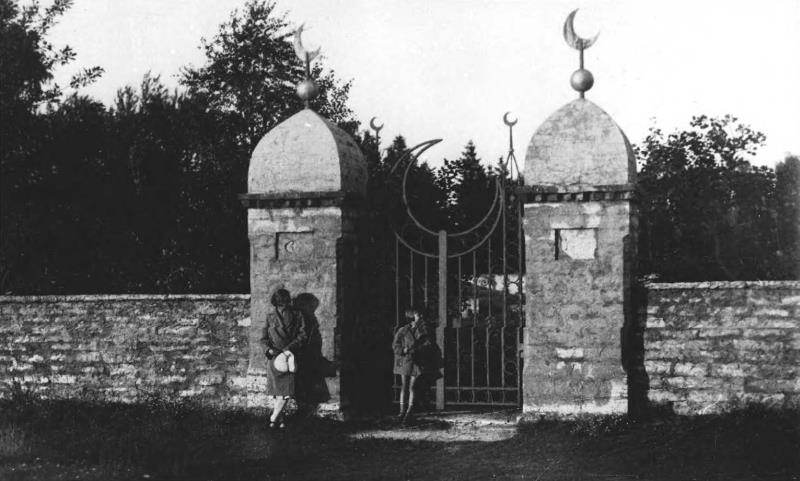
Removal of symbols. In the 1980s the wrought-iron gate bearing Islamic symbols was taken to Crimea; the limestone wall was demolished.
The traumatic reburial
The reburial process was extraordinarily harsh and psychologically devastating:
Violation of Islamic customs. According to Islamic teaching, the rest of the dead is sacred and reburial is generally forbidden. Being forced into it was a backbone-breaking experience.
Physical and mental violence. The occupation authorities offered replacement plots at the Liiva cemetery, but people had to dig up the remains of their loved ones themselves.
Degradation of human dignity. Relatives' bones were kept in cellars because the reburial had to wait for the right opportunity and the strength to carry it out. This left deep traumatizing memories that older Tatars carry to this day.
Consequences and assimilation
Cultural fading. The destruction of the cemetery and of other community buildings (e.g. the Narva house) weakened the community's ties and led to the fading of its culture.
Fear and tatarophobia. Constant persecution and the desecration of sacred places deepened fear, so that many Estonian Tatars changed their names and hid their origins to avoid repression.
Blurring of identity. The new burial ground at Liiva cemetery is a mix of old Estonian Tatar graves and the graves of Russian-speaking Muslims who immigrated during the occupation, which makes preserving the historical identity harder.
Today the cemetery grounds lie abandoned, but plans are under way, in cooperation with the Estonian War Museum, to turn the site into a dignified memorial.
The academic picture (Estonian Heritage Yearbook 2007)
The survey in the Estonian Heritage Yearbook (Lige and Orro) adds documented detail to the community tradition. The Muslim cemetery appears on Tallinn city maps already from the later 1870s; on the official 1885 map it is named. Around 1904 it was extended west and south-west along the narrow-gauge railway embankment, the limestone wall built (or extended) and an iron gate with Islamic symbolism commissioned.
By oral tradition the cemetery was, in the 1920s–30s, a peripheral but well-kept place; the gate was kept locked (unusual for the time) and the key requested from the Inner City caretaker. In Islamic custom the graves were unmarked — only mounds — before the war no flowers or wreaths were brought and no candles lit, and women were generally not admitted. The best-known burial was Sibgadulla Mähdejev („the king of the Tatars”, d. 1939).
The March 1944 bombing broke the drainage-ditch system and the cemetery flooded; the same hit may explain why the gate posts' shape was later changed. The intact walled ground stood until at least 1959; in the 1960s the west wall with the gate and much of the south wall were demolished. After closure a motor depot and a woodyard operated on the plot, and the gate was reportedly taken to Crimea.
Source: “The cemetery as the community's backbone” (a community document on the destruction of the Tallinn Muslim cemetery). See also: Cultural genocide of the historical Estonian Tatars.