The Nizhny Novgorod migration
The Nizhny Novgorod migration is the emigration wave that in the second half of the 19th century carried Mišär Tatars from the villages of the Sergach country to the Baltic coast. From this one wave three sister communities were born: the Tatars of Saint Petersburg, Finland and Estonia. The ancestors of the Estonian Mišärs are children of this migration.
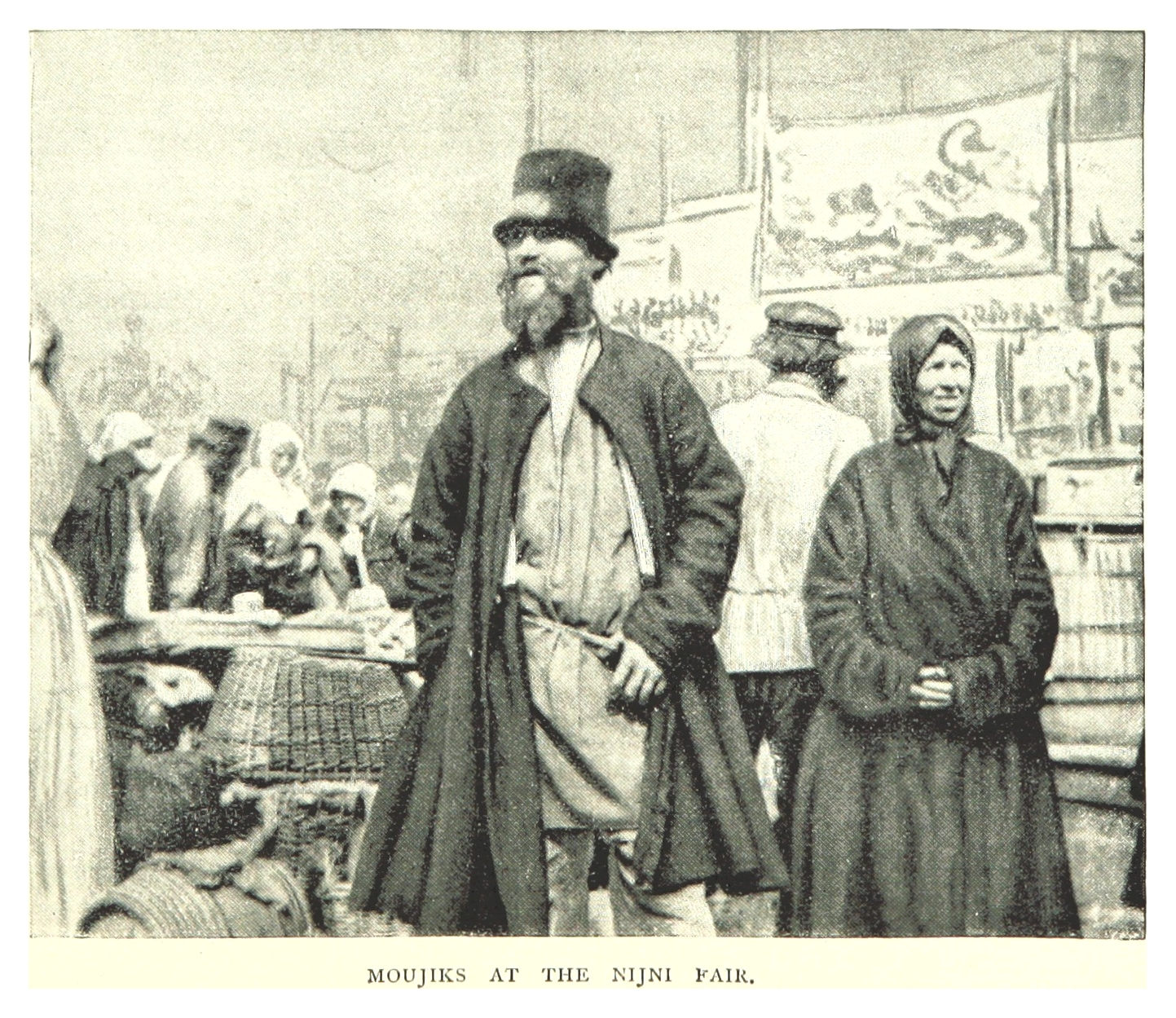
Crowds at the Nizhny Novgorod fair in an 1891 book engraving (Thomas Stevens (1891); Public domain; Wikimedia Commons)
The villages of the Sergach country
The migration's source was a group of Mišär villages — some twenty — in the Sergach county of Nizhny Novgorod province. These were old serving-Tatar villages that had kept Islam and the Mišär dialect for centuries. The Estonian community's sources name Kuy-Su as a source village; the best-known source village of the Finnish Tatars is Aktuk (Aktukovo).
Why they left
The villages sat on poor land: by the 19th century arable and pasture land had grown ever scarcer and farming no longer fed the families. When the abolition of serfdom in 1861 gave the peasants freedom of movement, the village men, short of income, turned to trade — at first as seasonal itinerant peddling, travelling in winter and returning home for the summer field work.
How the migration worked
The itinerant merchants sold easily portable goods: fabrics, furs, ready-made clothes and soap. The journeys first reached Saint Petersburg; the railway opened up north-western Russia, and from Saint Petersburg they moved on to Finland (from the late 1860s) and to Estonia. It was chain migration: a village's merchants sent for relatives and fellow villagers and took apprentices along — the Tallinn merchant Zakir Zakerov brought up to a dozen young men from his home village at a time, who learned the trade for two years with a month's holiday back home.
Three branches
Saint Petersburg remained the migration's first hub, growing a large Tatar community. The Sergach merchants reached Finland from the late 1860s; in free Finland that Mišär community could live on unbroken and keeps its language and faith to this day. The branch that reached Estonia founded the communities of Tallinn and Narva; the community that flowered in the Republic of Estonia was broken by the Soviet occupation. The three branches kept close contact — the Estonian Tatars' cultural society made trips to Finland, and Finnish imams served the Estonian congregations.
Ties to the home village
The emigrants kept ties with the home country: merchants sent money home, and Sibgadulla Mähdejev donated funds for wells and bridges in his home village. The tie was severed in the mid-1920s, when the Soviet occupation authorities closed the border — the Estonian Tatars lost contact with their relatives in Tatarstan and Nizhny Novgorod for decades.
See also
Sources: Toomas Abiline and Ringo Ringvee, 'Estonia' (Brill, 2016), pp. 105–127; the Wikipedia articles 'Finnish Tatars' and 'Mishar Tatars'; the City of Helsinki history portal ('Tatars in Helsinki').