Tchaikovsky and Estonia
Pyotr Tchaikovsky (1840–1893), one of the world's best-loved composers, spent the summer of 1867 in Haapsalu, Estonia. Out of that summer came the piano cycle Souvenir de Hapsal (“A Memory of Haapsalu”) — a small Estonian town's trace in the world's music. On Haapsalu's seaside promenade, the Tchaikovsky Bench of 1940 remembers him to this day.
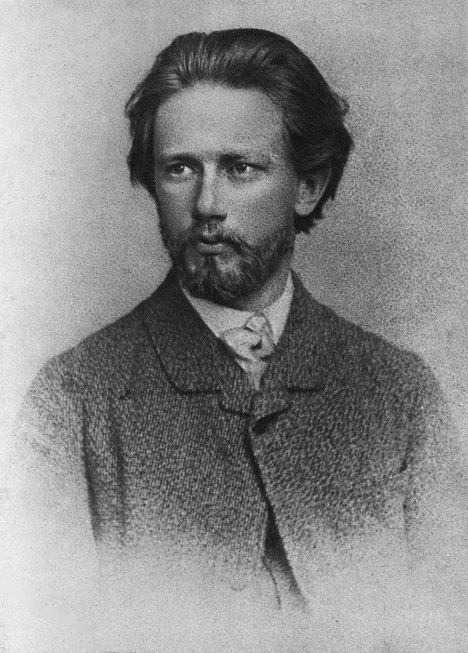
Pyotr Tchaikovsky (c. 1870).
A summer in Haapsalu (1867)
The 27-year-old Tchaikovsky — then a young teacher at the Moscow Conservatory, not yet a famous composer — arrived in Haapsalu (then Hapsal) in early June 1867 and stayed until 14/26 August. He lodged with his younger brothers Anatoly and Modest and with the Davydov family in a house at Suur-Mere 11. Haapsalu was then a famous mud-cure resort of the empire, drawing St Petersburg society for the summer. Tchaikovsky loved walking the shore promenade and watching the sea.
Souvenir de Hapsal
In Haapsalu Tchaikovsky wrote his first piano cycle, Souvenir de Hapsal (Op. 2), dedicating it to Vera Davydova. The cycle holds three pieces: Ruines d’un château (“Ruins of a castle”, E minor) — associated with the ruins of Haapsalu's episcopal castle —, a Scherzo (F major), and Chant sans paroles (“Song without words”, F major). The last became one of Tchaikovsky's most beloved piano miniatures altogether: Nikolai Rubinstein premiered the Scherzo in February 1868, and Max Erdmannsdörfer's orchestration of the Chant sans paroles pleased the composer so much that he conducted it himself. In the same Haapsalu summer Tchaikovsky also worked on his first opera, The Voyevoda.
“Kallis Mari” and the Sixth Symphony
Haapsalu tradition tells that, walking the promenade, Tchaikovsky heard a girl singing the Estonian song “Kallis Mari” (“Dear Mari”), and that an echo of its melody reached the second subject of the first movement of his Sixth Symphony (Pathétique, 1893). This is a tradition kept and loved in Haapsalu — Tchaikovsky scholarship does not directly confirm it, but the town has folded the story into its memory: even the Haapsalu museum's steamboat is named Kallis Mari.
The Tchaikovsky Bench
In 1940 a dolomite memorial bench by the sculptor Roman Haavamägi — the Tchaikovsky Bench — was erected on Haapsalu's shore promenade, its bas-relief showing the composer; it remains one of the town's best-known spots. Today his music plays at the bench, and Haapsalu holds a Tchaikovsky festival. The bench is protected as a cultural monument.
The wider Estonian connection
Tchaikovsky's Haapsalu summer belongs to the same imperial-era world in which the Tatars lived in tsarist Russia — including the Mišär merchants who, in that same decade, were beginning to reach Estonia's towns. Little Haapsalu shows how Estonia has left its trace in world culture: one of the world's most famous composers carried with him the memory of an Estonian seaside town — and named it in his music.
See also: The world's first Christmas tree.
See also: Arvo Pärt, Explorers from Estonia, Estonian science that changed the world, The Kaali meteorite crater, Bernt Notke's Danse Macabre, Tenet in Tallinn.
Sources: Souvenir de Hapsal (Wikipedia); Hapsal — Tchaikovsky Research; Tchaikovsky's Bench in Haapsalu (Visit Haapsalu); Pjotr Tšaikovski memorial bench (monument 4046) (Estonian Heritage Board); The story of the steamboat (Haapsalu and Läänemaa Museums).