Souvenirs from the Golden Horde: Turkic and Tatar words in Russian
Turkic and Tatar loanwords in Russian
Over its history Russian has absorbed a substantial layer of Turkic-origin vocabulary — much of it in the Middle Ages through the Golden Horde and the Kazan Tatars. There is no exact total: estimates range from a couple of hundred to over 2,000 (E. N. Shipova, „Словарь тюркизмов в русском языке”, 1976).
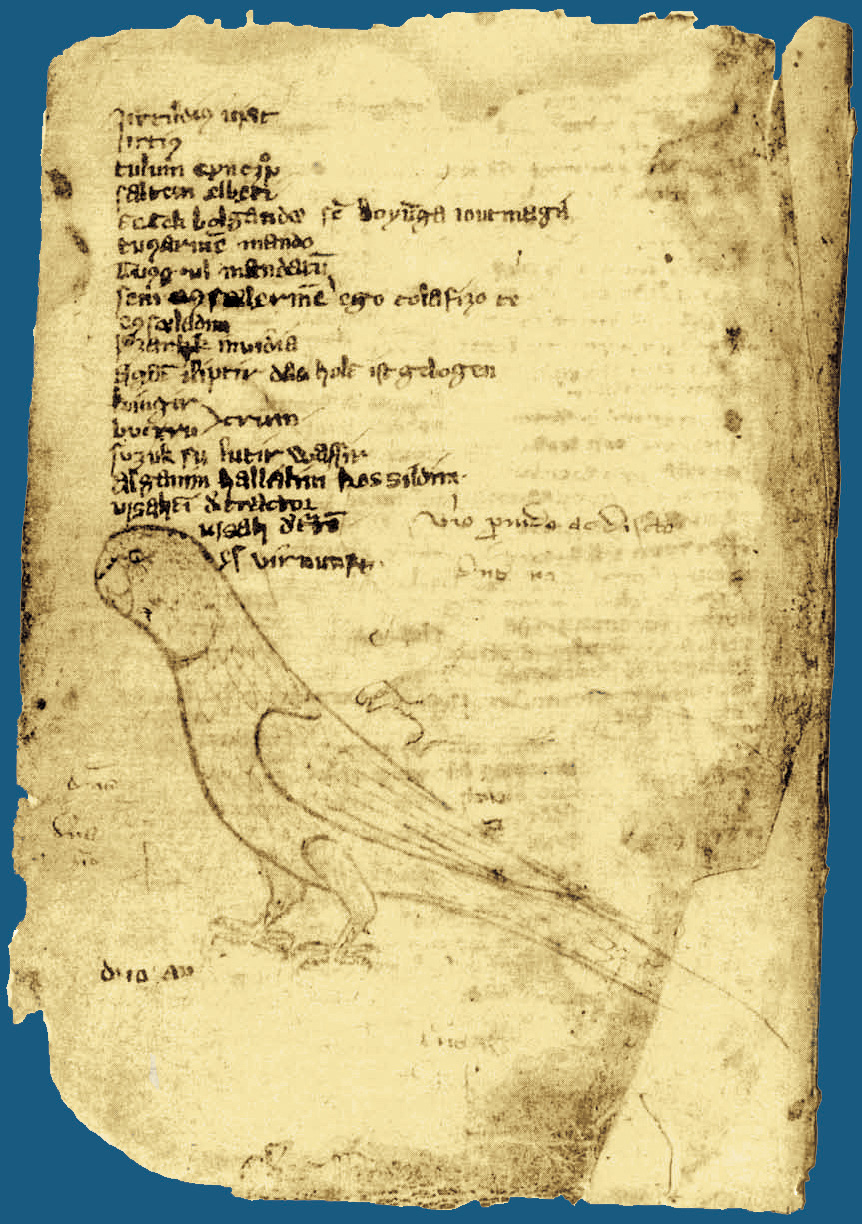
The Codex Cumanicus (1303) — a glossary of the Kipchak (Cuman) language in Latin, Persian and Cuman. The same Kipchak vocabulary whose words entered Russian and part of which lives on in Mišär.
The compared word-forms (Russian word, source form, Tatar and Mišär) are shown in bold to set them apart.
The „Source form” column gives the original word — the Turkic/Tatar source form as the etymology states it: often a Proto-Turkic reconstruction (with *), or a scripted ultimate origin (Cyrillic/Arabic, e.g. Persian خربز). The „Turkic etymology” column gives the full etymology. „—” means the source names no definite form (a form is available for 151 of the 215 words).
Which is older?
Every word is OLDER in the source language — that is the definition of borrowing: the Turkic (or Tatar) word existed before Russian took it over. The times are approximate: the source-language age is derived from the etymology (a Proto-/Common-Turkic root is ~1st millennium; Ottoman/Chagatai later, ~15th–19th c.); the entry into Russian is the sourced first-attestation year where Wiktionary gives one (e.g. богатырь 1425, полтина 12th c.), otherwise a borrowing-wave estimate (≈13th–16th c.).
Three waves of borrowing
Turkic loans entered Russian mainly in three waves, which the sources often do not clearly separate:
the Golden Horde / Kipchak-Tatar wave (13th–15th century) — administration, money, trade and the military (e.g. деньги „money”, казна „treasury”, таможня „customs”, ясак „tribute”, орда „horde”, богатырь „hero”). Most of Russian's Turkic loans come from this era.
the Ottoman Turkish wave (later, via the south) — some clothing and food words.
the Central Asian Turkic wave (later still) — some regional words.
Where it came from: the largest, the Golden Horde wave, came from the Golden Horde — the Ulus of Jochi, the north-western part of the Mongol Empire, ruled by a Turkic-Kipchak-speaking Tatar elite. The words spread into Russian from its capital Sarai on the lower Volga (13th–15th century), through the administration and tribute-collection imposed on the Rus' principalities and through trade — at that time the Rus' principalities were tribute-paying vassals of the Horde.
The Golden Horde's Kipchak was the same linguistic world from which modern Tatar and Mišär descend — so „of Tatar origin” and „of Golden-Horde Turkic origin” usually mean the same borrowing channel.
Comparison table
Below, 215 Turkic/Tatar loanwords in Russian (source: English Wiktionary). The Turkic column gives the source form; Tatar and Mišär cognates where attested (Tatar 81, Mišär 22 words), else „—”.
Russian word | Meaning | Source form | Turkic etymology | Tatar form | Mišär cognate | In source | In Russian |
|---|---|---|---|---|---|---|---|
аба (ába) | elder sister | *aba ("father, bear") | dialectal Tatar аба (aba); from Proto-Turkic *aba ("father, bear") | аба | — | Turkic (old) | ≈13th–16th c. |
абдраган (abdragán) | fright, fear | аптыраган (aptırağan, "confused, bewildered") | Tatar аптыраган (aptırağan, "confused, bewildered") | аптыраган | — | Turkic (old) | ≈13th–16th c. |
азу (azú) | azu (Tatar dish) | азу ('azu) | Qasim Tatar variant 'азу ('azu) of Tatar казы (qazı) | казы | — | Turkic (old) | ≈13th–16th c. |
айда (aydá) | let's go | әйдә (äydä) | Tatar әйдә (äydä) | әйдә | äjdä | Turkic (old) | ≈13th–16th c. |
аймак (aymák) | aimag, province | аймаг (ajmag) | Turkic or Mongolian аймаг (ajmag) | — | — | Mongolic (medieval) | ≈13th–16th c. |
айран (ayrán) | airan (yogurt drink) | әйрән (äyrän) | a Turkic language; compare Tatar әйрән (äyrän), Turkish ayran | әйрән | äjrän | Turkic (old) | ≈13th–16th c. |
аксакал (aksakál) | elder, aksakal | аксакал (aqsaqal) | Turkic languages; cognates Tatar аксакал (aqsaqal), Kazakh ақсақал (aqsaqal) | аксакал | — | Turkic (old) | ≈13th–16th c. |
алмаз (almáz) | diamond | алмаз (almaz) | Tatar алмаз (almaz); from Persian الماس (almâs) | алмаз | — | Turkic (old) | ≈13th–16th c. |
алтын (altýn) | altyn (coin) | алтын (altın, "gold") | Tatar алтын (altın, "gold") | алтын | — | Turkic (old) | ≈13th–16th c. |
алый (ályj) | crimson, scarlet | ал (al) | a Turkic source; compare Bashkir ал (al), Turkish al | — | al | Turkic (old) | ≈13th–16th c. |
аманат (amanát) | hostage | أَمَانَة (ʔamāna, "surety") | via a Turkic language from Arabic أَمَانَة (ʔamāna, "surety") | — | — | via Turkic (Pers./Ar.) | ≈14th–17th c. |
амбар (ambár) | barn, granary | انبار (anbâr) | via Turkic; from Persian انبار (anbâr) | амбар | — | Turkic (old) | ≈13th–16th c. |
арап (aráp) | Arab | — | from Turkic; Turkish Arap ("Arab") | — | — | Turkic (old) | ≈13th–16th c. |
арба (arbá) | araba (cart) | — | from a Turkic source | — | — | Turkic (old) | ≈13th–16th c. |
арбуз (arbúz) | watermelon | خربز (xarboz) | via Turkic from Persian خربز (xarboz) | — | karbõz | via Turkic (Pers./Ar.) | ≈14th–17th c. |
аркан (arkan) | lasso, lariat | арҡан (arqan) | a Turkic source (compare Bashkir арҡан (arqan), Kazakh арқан (arqan)) | — | — | Turkic (old) | ≈13th–16th c. |
архалук (arxaluk) | jerkin, light caftan | — | a Turkic source, such as Azerbaijani arxalıq | — | — | Turkic (old) | ≈13th–16th c. |
арча (arča) | juniper | *artuč (via Middle Mongol / Proto-Mongolic *arča) | Proto-Turkic *artuč (via Middle Mongol / Proto-Mongolic *arča) | арча | — | Common Turkic (1st m.) | ≈13th–16th c. |
арык (arýk) | aryk (irrigation channel) | *ārïk | Proto-Common Turkic *ārïk; cognate Tatar арык (arıq) | арык | — | Common Turkic (1st m.) | ≈13th–16th c. |
аул (aul) | village | — | West (Kypchak) Turkic awul, awïl | — | avõl | Turkic (old) | ≈13th–16th c. |
бадья (badʹja) | tub, bucket | бадъя (bad-ya) | Tatar бадъя (bad-ya), from Persian بادیه (bâdye) | бадъя | — | via Turkic (Pers./Ar.) | ≈14th–17th c. |
базар (bazar) | market, bazaar | بازار (bâzâr) | a Turkic source, from Persian بازار (bâzâr) | — | bazar | via Turkic (Pers./Ar.) | ≈14th–17th c. |
бай (baj) | rich man | бай | a Turkic source (cf. Turkish bay, Kazakh бай, Tatar бай) | бай | baj | Turkic (old) | ≈13th–16th c. |
байбак (bajbak) | steppe marmot | — | From Tatar | — | — | Turkic (old) | ≈13th–16th c. |
баклага (baklaga) | wooden flask | — | some Turkic language, compare Crimean Tatar bakla ("wooden measure for grain") | bakla | — | Turkic (old) | 16th c. |
балаган (balagan) | booth, farce | بالاخانه (bâlâxâne) | via a Turkic language, ultimately from Persian بالاخانه (bâlâxâne) | — | — | via Turkic (Pers./Ar.) | ≈14th–17th c. |
балда (balda) | sledgehammer, blockhead | *baltu ("axe") | Proto-Turkic *baltu ("axe") | — | — | Common Turkic (1st m.) | ≈13th–16th c. |
балык (balyk) | cured fish | *bālïk ("fish") | Proto-Turkic *bālïk ("fish") | — | — | Common Turkic (1st m.) | ≈13th–16th c. |
барабан (baraban) | drum | — | a Turkic source | — | — | Turkic (old) | ≈13th–16th c. |
барс (bars) | leopard, panther | *bars | Proto-Turkic *bars | — | — | Common Turkic (1st m.) | ≈13th–16th c. |
барсук (barsuk) | badger | *borsuk ("badger") | Proto-Turkic *borsuk ("badger") | — | — | Common Turkic (1st m.) | ≈13th–16th c. |
барыга (barýga) | profiteer | барыш | a Turkic borrowing (cognate with барыш barýš "profit") | — | — | Turkic (old) | ≈13th–16th c. |
баул (baúl) | trunk | — | from Turkic (via Italian baule) | — | — | Turkic (old) | ≈13th–16th c. |
бахча (baxčá) | melon field | باغچه | a Turkic source (from Persian باغچه bâġče) | — | — | via Turkic (Pers./Ar.) | ≈14th–17th c. |
башка (baškí) | head | — | a Turkic language, probably a dative singular form attested in Kipchak languages | баш | baš | Turkic (old) | ≈13th–16th c. |
башли (bašlí) | money | — | likely of Turkic origin | баш | — | Turkic (old) | ≈13th–16th c. |
башлык (bašlýk) | hood | башлыҡ | a Turkic source (compare Bashkir башлыҡ, Turkish başlık) | — | — | Turkic (old) | ≈13th–16th c. |
башмак (bašmák) | shoe | *baĺmak (perhaps via Ottoman Turkish باشمق başmak) | Proto-Turkic *baĺmak (perhaps via Ottoman Turkish باشمق başmak) | башмак | bašmak | Common Turkic (1st m.) | ≈16th–18th c. |
беляш (beljáš) | meat pie | бәлеш (bäleş) | Tatar бәлеш (bäleş) (from Classical Persian بالش bâliš) | бәлеш | bäleš | via Turkic (Pers./Ar.) | ≈14th–17th c. |
беркут (bérkut) | golden eagle | *bürküt | Proto-Turkic *bürküt | бөркет | — | Common Turkic (1st m.) | ≈13th–16th c. |
бесик (besík) | cradle | *bēšik | Proto-Common Turkic *bēšik, from Proto-Turkic *bẹĺčig | — | — | Common Turkic (1st m.) | ≈13th–16th c. |
бешмет (bešmét) | beshmet | бишмәт (bişmät) | Tatar бишмәт (bişmät) | бишмәт | — | Turkic (old) | ≈13th–16th c. |
бирка (bírka) | tag | — | a Turkic borrowing (compare Turkish bir + iki) | — | — | Turkic (old) | ≈13th–16th c. |
бирюза (birjuzá) | turquoise | پیروزه | a Turkic language (from Persian پیروزه piruze) | — | — | via Turkic (Pers./Ar.) | ≈14th–17th c. |
бирюк (birjúk) | lone wolf | *bȫrü | Proto-Turkic *bȫrü | бүре | — | Common Turkic (1st m.) | ≈13th–16th c. |
битюг (bitjúg) | draft horse | — | a Turkic source | — | — | Turkic (old) | ≈13th–16th c. |
богатырь (bogatýrʹ) | hero warrior | *bagatur | Proto-Turkic *bagatur | — | batõr | Common Turkic (1st m.) | 1425 |
бугай (bugáj) | bull | *buka | Proto-Turkic *buka | — | — | Common Turkic (1st m.) | ≈13th–16th c. |
буран (burán) | blizzard | буран | Turkic; compare Bashkir буран, Crimean Tatar boran, Kazakh боран, Tatar буран | буран | — | Turkic (old) | ≈13th–16th c. |
бурдюк (burdjúk) | waterskin | — | Turkish bardak | — | — | Turkic (old) | ≈13th–16th c. |
бурка (búrka) | felt cloak | — | a Turkic source (less likely); Turkish börk, bürümek | — | — | Turkic (old) | ≈13th–16th c. |
бурундук (burundúk) | chipmunk | — | a Turkic borrowing | борындык | — | Turkic (old) | ≈13th–16th c. |
бурый (búryj) | brown | بور (bōr, "bay horse") | Chagatai بور (bōr, "bay horse") | — | — | Chagatai (15th–19th c.) | ≈17th–19th c. |
бязь (bjazʹ) | coarse calico | بَزّ (bazz) | Turkic, from Arabic بَزّ (bazz) | — | — | via Turkic (Pers./Ar.) | ≈14th–17th c. |
ватага (vatága) | gang | *våtaɣ | Old Chuvash *våtaɣ, *uotaɣ, from Proto-Turkic *ōtag | — | — | Common Turkic (1st m.) | ≈13th–16th c. |
войлок (vójlok) | felt | өйлек (öylek, "domestic material") | Tatar өйлек (öylek, "domestic material") | өйлек | — | Turkic (old) | ≈13th–16th c. |
вьюк (vʹjuk) | load, pack | *yük | Proto-Turkic *yük | — | — | Common Turkic (1st m.) | ≈13th–16th c. |
деньги (dénʹgi) | money | теңге | a Turkic source; cf. Kazakh теңге, Bashkir тәңкә | — | — | Turkic (old) | ≈13th–16th c. |
джейран (džejrán) | gazelle | *yẹgren | Proto-Turkic *yẹgren | — | — | Common Turkic (1st m.) | ≈13th–16th c. |
джигит (džigít) | horseman | жігіт | Turkic; cf. Kazakh жігіт, Kyrgyz жигит | — | — | Turkic (old) | ≈13th–16th c. |
джида (džidá) | oleaster | *yidge | Uzbek жийда (jiyda), from Proto-Turkic *yidge | — | — | Common Turkic (1st m.) | ≈13th–16th c. |
домра (dómra) | domra lute | تنبور (tanbur) | a Turkic language, from Persian تنبور (tanbur) | — | — | via Turkic (Pers./Ar.) | ≈14th–17th c. |
евшан (jevšan) | wormwood | یاوشان | from a Turkic language; compare to Ottoman Turkish یاوشان, Turkish yavşan, Turkmen ýowşan | — | — | Turkic (old) | 1201 |
ералаш (jeralaš) | jumble | *āra | Ultimately from Proto-Turkic *āra | аралаш | — | Common Turkic (1st m.) | ≈13th–16th c. |
ерик (jerik) | creek | *ayïrïk ("fork, crossroad, creek, brook") | *ayïrïk ("fork, crossroad, creek, brook"), ultimately from Proto-Turkic *adïr- | әйерек | — | Common Turkic (1st m.) | ≈13th–16th c. |
есаул (jesaul) | Cossack captain | — | Via a Turkic language, ultimately from Middle Mongol 札撒兀勒 (ǰasa'ul) | — | — | Mongolic (medieval) | ≈13th–16th c. |
жесть (žestʹ) | tin plate | жез (jez) | Probably a Turkic or Mongolic borrowing; compare Kazakh жез (jez), Tatar җиз (ciz), Mongolian зэс (zes) | җиз | — | Mongolic (medieval) | ≈13th–16th c. |
изюм (izjum) | raisin | ئۈزۈم (üzüm) | A Turkic loan word; cognate with Uyghur ئۈزۈم (üzüm), Turkish üzüm | — | — | Turkic (old) | ≈13th–16th c. |
инжир (inžir) | fig | انجیر (anjir) | From Turkic (compare Turkish incir), from Persian انجیر (anjir) | — | injir | Turkic (old) | ≈13th–16th c. |
ирга (irga) | juneberry | *ïrgaï | From a Turkic language, ultimately from Middle Mongol *ïrgaï | — | — | Mongolic (medieval) | ≈13th–16th c. |
ишак (išak) | donkey | *eĺčgek | borrowed from Turkic languages, probably from Kipchak; ultimately from Proto-Turkic *eĺčgek | ишәк | išäk | Turkic (old) | 1567 |
йогурт (jogurt) | yoghurt | یوغورت (yoğurt) | Ottoman Turkish یوغورت (yoğurt) | — | — | Ottoman (15th–19th c.) | ≈16th–18th c. |
кабак (kabak) | pumpkin | кабак (qabaq) | A Turkic borrowing, compare to Azerbaijani qabaq, Tatar кабак (qabaq), Turkish kabak | кабак | — | Turkic (old) | ≈13th–16th c. |
кабан (kaban) | wild boar | кабан (qaban) | From a Turkic language; compare Tatar кабан (qaban), Azerbaijani qaban, Kazakh қабан (qaban) | кабан | — | Turkic (old) | ≈13th–16th c. |
кабачок (kabačok) | courgette | кабак (kabák, "pumpkin") | кабак (kabák, "pumpkin") + -ок diminutive, from Turkic; compare Azerbaijani qabaq, Tatar кабак (qabaq), Turkish kabak | кабак | — | Turkic (old) | ≈13th–16th c. |
кавардак (kavardak) | hodgepodge | *kagur- | Borrowed from Turkic, compare Kazakh қуырдақ (quyrdaq), ultimately from Proto-Turkic *kagur- | — | — | Turkic (old) | ≈13th–16th c. |
каган (kagan) | khagan | — | from a Turkic language, compare Old Turkic 𐰴𐰍𐰣 (qaɣan) | — | — | Turkic (old) | ≈13th–16th c. |
кадык (kadyk) | Adam's apple | قاتتىق (qattiq) | A Turkic borrowing: compare Uyghur قاتتىق (qattiq) | — | — | Turkic (old) | ≈13th–16th c. |
казак (kazak) | Cossack | — | a Turkic language | — | — | Turkic (old) | ≈13th–16th c. |
казан (kazan) | cauldron | қазан (qazan) | Borrowed from a Turkic language, compare to Azerbaijani qazan, Kazakh қазан (qazan), Turkish kazan, Uzbek qozon | — | kazan | Turkic (old) | ≈13th–16th c. |
казах (kazax) | Kazakh | қазақ (qazaq) | Kazakh қазақ (qazaq), from Old Turkic 𐰴𐰔𐰍𐰴 (qazǧaq, "profiteer") | — | — | Old Turkic (8th–11th c.) | ≈17th–19th c. |
казначей (kaznačej) | treasurer | — | From a Turkic source | казначы | — | Turkic (old) | ≈13th–16th c. |
кайма (kajma) | border, hem | — | From a Turkic language | — | — | Turkic (old) | ≈13th–16th c. |
калита (kalita) | purse, pouch | қалта (qalta, "pouch, pocket") | Kazakh қалта (qalta, "pouch, pocket") | — | — | Turkic (old) | ≈17th–19th c. |
калым (kalym) | bride price | *kalïŋ | Proto-Turkic *kalïŋ | калым | — | Common Turkic (1st m.) | ≈13th–16th c. |
камка (kamka) | damask | — | From Turkic | камка | — | Turkic (old) | ≈13th–16th c. |
камлать (kamlatʹ) | to shamanize | *qamla- ("to perform a shamanistic ritual") | a Turkic verb *qamla- ("to perform a shamanistic ritual"), from Proto-Turkic *kām ("shaman, sorcerer") | — | — | Common Turkic (1st m.) | ≈13th–16th c. |
камыш (kamyš) | reed | — | From Turkic | — | — | Turkic (old) | ≈13th–16th c. |
кандалы (kandaly) | shackles, fetters | — | Borrowed via Turkic from Arabic | — | — | via Turkic (Pers./Ar.) | ≈14th–17th c. |
капкан (kapkan) | trap, snare | — | Crimean Tatar qapqan | qapqan | — | Turkic (old) | ≈13th–16th c. |
каракал (karakal) | caracal | — | From a Turkic language | — | — | Turkic (old) | ≈13th–16th c. |
карандаш (karandaš) | pencil | — | Borrowed from Turkic. Compare Turkish karataş ("black slate"), from kara ("black") + taş ("stone") | кара таш | kara + taš | Turkic (old) | 1788 |
караул (karaul) | guard, watch | — | A Turkic borrowing | каравыл | — | Turkic (old) | 16th–17th c. |
карга (karga) | crow; hag | — | A Turkic borrowing. Compare Turkish karga | — | karga | Turkic (old) | ≈13th–16th c. |
карий (karij) | brown (eyes) | *kara | Proto-Turkic *kara | — | — | Common Turkic (1st m.) | ≈13th–16th c. |
каюк (kajuk) | caique, boat | *kayguk | Proto-Turkic *kayguk | — | — | Common Turkic (1st m.) | ≈13th–16th c. |
кибитка (kibitka) | nomad tent | кибет (kibet) | Tatar кибет (kibet); Karakhanid käbit "inn" | кибет | — | Turkic (old) | 17th c. |
кизил (kizil) | cornel, dogwood | *kïŕïl ("red") | Proto-Turkic *kïŕïl ("red") | — | — | Common Turkic (1st m.) | ≈13th–16th c. |
кинжал (kinžal) | dagger | خنجر | A Turkic borrowing (related to Persian خنجر xanjar) | хәнҗәр | — | via Turkic (Pers./Ar.) | ≈14th–17th c. |
кирдык (kirdyk) | done for | *kīr- ("to enter") | Proto-Turkic *kīr- ("to enter") or *kïr- ("to break") | — | — | Common Turkic (1st m.) | ≈13th–16th c. |
кирка (kirká) | pickaxe | — | Likely from Turkic; compare Turkish kürek, Azerbaijani kərki ("adze") | — | — | Turkic (old) | ≈13th–16th c. |
кирпич (kirpič) | brick | кірпіш | A Turkic borrowing; compare Kazakh кірпіш, Turkish kerpiç | — | — | Turkic (old) | ≈13th–16th c. |
киса (kisá) | purse, moneybag | کیسه | From a Turkic language; compare Turkish kese, Azerbaijani kisə (from Persian کیسه kise) | — | — | Turkic (old) | ≈13th–16th c. |
кишлак (kišlak) | village | — | Borrowed from Turkic; compare Turkish kışlak, Azerbaijani qışlaq | — | — | Turkic (old) | ≈13th–16th c. |
клобук (klobuk) | monk's cowl | — | An early borrowing from a Turkic language | — | — | Turkic (old) | ≈13th–16th c. |
кобза (kobza) | kobza (lute) | *kopuŕ (via a Turkic language) | Proto-Turkic *kopuŕ (via a Turkic language) | — | — | Common Turkic (1st m.) | ≈13th–16th c. |
кобура (kobura) | holster | — | From Turkic; compare Turkish kubur | — | — | Turkic (old) | ≈13th–16th c. |
колпак (kolpak) | cap, calpack | қалпақ (qalpaq) | a Turkic source (compare Turkish kalpak, Kazakh қалпақ (qalpaq), Bashkir ҡалпаҡ (qalpaq)), ultimately from Middle Persian kwlʾp̄k' (kulāfak) | калфак | — | Turkic (old) | ≈13th–16th c. |
колчан (kolčan) | quiver | колчан (qolçan) | Tatar колчан (qolçan) | колчан | — | Turkic (old) | ≈13th–16th c. |
корсак (korsak) | corsac fox | *karsak | Proto-Turkic *karsak | — | — | Common Turkic (1st m.) | ≈13th–16th c. |
кочевать (kočevatʹ) | to be nomadic | *köč- | Proto-Turkic *köč- | — | — | Common Turkic (1st m.) | ≈13th–16th c. |
кошма (košma) | felt mat | — | a Turkic language (compare Azerbaijani qoşmaq, Turkish koşmak) | — | — | Turkic (old) | ≈13th–16th c. |
кузов (kuzov) | basket, body | — | Tatar kyzau̯ ("basket") | kyzau̯ | — | Turkic (old) | ≈13th–16th c. |
кулак (kulak) | fist | *kul ("hand") | Turkic, from *kul ("hand") | кул | — | Turkic (old) | ≈13th–16th c. |
кумыс (kumys) | kumis | — | a Turkic source, such as Tatar qımız ("fermented milk") | qımız | — | Turkic (old) | ≈13th–16th c. |
курган (kurgan) | burial mound | — | Turkic (compare Turkish kurgan ("fortress")) | — | — | Turkic (old) | ≈13th–16th c. |
курдюк (kurdjuk) | fat tail | *kudruk | Proto-Turkic *kudruk | — | — | Common Turkic (1st m.) | ≈13th–16th c. |
курень (kurenʹ) | hut, kuren | курінь (kurínʹ) | from Turkic (via Ukrainian курінь (kurínʹ)) | — | — | Turkic (old) | 1572 |
кутак (kutak) | (vulg.) dick | кутак (qutaq) | Tatar кутак (qutaq) | кутак | — | Turkic (old) | ≈13th–16th c. |
кыпчак (kypčak) | Kipchak | *ïgač ('tree') | a Turkic source; Karakhanid kuv ağaç, from Proto-Turkic *ïgač ('tree') | — | — | Turkic (old) | ≈13th–16th c. |
лапша (lapša) | noodles | لخشک | Tatar [Term?] or Uyghur [Term?] (ultimately Iranian, cf. Persian لخشک laxšak) | — | läkšä | Turkic (old) | ≈13th–16th c. |
лачуга (lačuga) | hovel, shack | — | Chagatai alačuɣ | алачык | — | Chagatai (15th–19th c.) | ≈17th–19th c. |
лиман (liman) | estuary, liman | — | Turkish liman, Crimean Tatar liman (via Turkic from Byzantine Greek λιμένιον) | liman | — | Turkic (old) | ≈13th–16th c. |
лошадь (lošadʹ) | horse | лоша (loša) | лоша (loša), a Turkic borrowing; cf. Chuvash лаша, Kazakh алаша, Crimean Tatar alaşa | алаша | alaša | Turkic (old) | ≈13th–16th c. |
лошак (lošak) | hinny | — | Turkic | — | — | Turkic (old) | ≈13th–16th c. |
мазут (mazut) | fuel oil | مَهْزُولَات | Via Turkic (from Arabic مَهْزُولَات mahzūlāt 'refuse, waste') | — | — | via Turkic (Pers./Ar.) | ≈14th–17th c. |
майдан (majdan) | square | — | a Turkic language (compare Turkish meydan 'square') | — | — | Turkic (old) | ≈13th–16th c. |
мечеть (mečetʹ) | mosque | мешіт | a Turkic language (compare Kazakh мешіт, Tatar мәчет, Turkmen metjit) | мәчет | mätset | Turkic (old) | ≈13th–16th c. |
мишень (mišenʹ) | target | — | Turkic (compare Turkish nişan) | — | — | Turkic (old) | ≈13th–16th c. |
мулла (mulla) | mullah | мулла (mulla) | Tatar мулла (mulla), from Arabic مولى | мулла | mulla | via Turkic (Pers./Ar.) | 17th c. |
мусульманин (musulʹmanin) | Muslim | мөселман | Turkic (compare Tatar мөселман, Kazakh мұсылман) | мөселман | — | Turkic (old) | ≈13th–16th c. |
муэдзин (muèdzin) | muezzin | مُؤَذِّن | a Turkic source (from Arabic مُؤَذِّن muʔaḏḏin) | — | — | via Turkic (Pers./Ar.) | ≈14th–17th c. |
набалдашник (nabaldašnik) | knob | балдак (baldaq, "hilt of a saber, knob on a saber handle, smooth ring without a stone") | Tatar балдак (baldaq, "hilt of a saber, knob on a saber handle, smooth ring without a stone"), or from Ottoman Turkish بالداق (baldak) | балдак | — | Ottoman (15th–19th c.) | ≈16th–18th c. |
намаз (namaz) | prayer | نماز (namâz) | a Turkic source, from Persian نماز (namâz) | — | — | via Turkic (Pers./Ar.) | ≈14th–17th c. |
нар (nar) | hybrid camel | нар (nar) | A Turkic borrowing. Compare Kyrgyz nar, Kazakh нар (nar) | — | — | Turkic (old) | ≈13th–16th c. |
орда (orda) | horde | *ordu | From a Kipchak language, from Proto-Turkic *ordu | — | — | Common Turkic (1st m.) | ≈13th–16th c. |
отара (otara) | flock | — | Borrowed from Turkic. Compare Karaim otar | — | — | Turkic (old) | ≈13th–16th c. |
очаг (očag) | hearth | *ōtčak ("hearth") | from Old Turkic očaq, očuq ("stove, oven"); ultimately from Proto-Turkic *ōtčak ("hearth") | — | — | Old Turkic (8th–11th c.) | ≈13th–16th c. |
пай (paj) | share | пай (pay) | From Turkic, ultimately from Middle Chinese 派 (pài). Compare Turkish pay, Southern Altai пай (pay), Tatar пай (pay), Uzbek пай (pay) | пай | — | Turkic (old) | ≈13th–16th c. |
палас (palas) | carpet | پلاس (pelâs) | Borrowed from Turkic, from Persian پلاس (pelâs) | — | — | via Turkic (Pers./Ar.) | ≈14th–17th c. |
паранджа (parandža) | burqa | пәрәнҗә (päräncä) | Borrowed from Tatar пәрәнҗә (päräncä), from Kazakh паранжы (paranjy), паранжа (paranja), from Uzbek paranji, from Tajik фаранҷӣ | пәрәнҗә | — | Turkic (old) | ≈17th–19th c. |
печенег (pečeneg) | Pecheneg | печенѣгъ (pečeněgŭ) | Inherited from Old East Slavic печенѣгъ (pečeněgŭ), of Turkic origin and related to Turkish bacanak | — | — | Turkic (old) | ≈13th–16th c. |
полтина (poltina) | fifty copecks | *tegiŋ (compare modern Russian тин) | from Old East Slavic полъ ("half") + a currency term derived from Proto-Turkic *tegiŋ (compare modern Russian тин) | — | — | Common Turkic (1st m.) | early 12th c. |
разгильдяй (razgilʹdjaj) | slob | уразгильды (urazgilʹdı) | Per Trubachev, quoting Popov, derived from Tatar уразгильды (urazgilʹdı), уразгильдей (urazgilʹdey), also разгильдей (razgilʹdey), разгильдяй (razgilʹdyay) | уразгильды | — | Turkic (old) | ≈13th–16th c. |
рамазан (ramazan) | Ramadan | رمضان (ramazân) | From Turkic, from Persian رمضان (ramazân), from Arabic رَمَضَان (ramaḍān) | — | — | via Turkic (Pers./Ar.) | ≈14th–17th c. |
рундук (runduk) | storage chest | орындыкъ (orındık) | A Turkic borrowing, Nogai орындыкъ (orındık), Kazakh орындық (oryndyq), Kyrgyz орундук, Tatar урындык (urındıq, "chair") | урындык | — | Turkic (old) | ≈17th–19th c. |
сабантуй (sabantuj) | plough festival | Сабантуй (Sabantuy) | Borrowed from Tatar Сабантуй (Sabantuy) | Сабантуй | — | Turkic (old) | ≈13th–16th c. |
сагайдак (sagajdak) | quiver | — | Borrowed from a Turkic language. Ultimately from Middle Mongol ᠰᠠᠭᠠᠳᠠᠭ (saɣadaɣ, "quiver") | — | — | Mongolic (medieval) | ≈13th–16th c. |
сазан (sazan) | wild carp | سازان (sazan) | Ottoman Turkish سازان (sazan) | — | — | Ottoman (15th–19th c.) | ≈16th–18th c. |
сайдак (sajdak) | bow case | — | a Turkic language | — | — | Turkic (old) | ≈13th–16th c. |
саман (saman) | adobe | — | Turkish saman | — | — | Turkic (old) | ≈13th–16th c. |
сарай (saraj) | shed | سرای (sarây) | via Turkic, from Persian سرای (sarây) | — | — | via Turkic (Pers./Ar.) | ≈14th–17th c. |
сарана (sarana) | martagon lily | сарана (sarana) | Tatar сарана (sarana) | сарана | — | Turkic (old) | ≈13th–16th c. |
саранча (sarančá) | locust | *sārïg | Proto-Turkic *sārïg | — | — | Common Turkic (1st m.) | ≈13th–16th c. |
сарафан (sarafán) | sarafan pinafore | — | Turkic särapa(i) | — | — | Turkic (old) | ≈13th–16th c. |
сарыч (saryč) | buzzard | *siarïg | Proto-Turkic *siarïg | — | — | Common Turkic (1st m.) | ≈13th–16th c. |
севрюга (sevrjúga) | starry sturgeon | *sivrüg | Old Turkic *sivrüg | söyrök | — | Old Turkic (8th–11th c.) | ≈13th–16th c. |
стакан (stakán) | drinking glass | — | Turkic dostaqan | тустыган | — | Turkic (old) | ≈13th–16th c. |
сургуч (surgúč) | sealing wax | صیر | a Turkic language (صیر sır + ـغج -gaç) | — | — | Turkic (old) | mid-17th c. |
сурок (surók) | marmot | суыр | Turkic (compare Kazakh суыр) | — | — | Turkic (old) | ≈13th–16th c. |
сурьма (surʹmá) | antimony | — | From Turkic (compare Turkish sürme) | сөрмә | — | Turkic (old) | ≈13th–16th c. |
сырт (syrt) | upland ridge | *sïrt | Proto-Turkic *sïrt | — | — | Common Turkic (1st m.) | ≈13th–16th c. |
сычуг (syčúg) | abomasum | — | Kipchak suzug (Codex Cumanicus) | — | — | Turkic (old) | ≈13th–16th c. |
табор (tabor) | camp | طابور (tabur) | Ottoman Turkish طابور (tabur) | — | — | Ottoman (15th–19th c.) | ≈16th–18th c. |
табун (tabun) | herd of horses | табын | a Turkic language (compare Tatar табын, Kazakh табын) | табын | — | Turkic (old) | ≈13th–16th c. |
таган (tagan) | trivet | таган (tağan) | Tatar таган (tağan) | таган | — | Turkic (old) | ≈13th–16th c. |
таз (taz) | basin | тас | a Turkic borrowing (compare Crimean Tatar tas, Turkish tas, Tatar тас); ultimately Persian تاس (tâs) | тас | — | Turkic (old) | ≈13th–16th c. |
тал (tal) | willow | *tal | Proto-Turkic *tal | — | — | Common Turkic (1st m.) | ≈13th–16th c. |
таможня (tamožnja) | customs | тамъга (tamŭga) | Old East Slavic тамъга (tamŭga), from a Turkic source (compare Bashkir тамға) | — | — | Turkic (old) | ≈13th–16th c. |
таракан (tarakan) | cockroach | таракан | Turkic tarakan (compare Tatar таракан) | таракан | — | Turkic (old) | 15th c. |
тесьма (tesʹma) | ribbon | *tasma ("leash, strap") | Proto-Common Turkic *tasma ("leash, strap") | — | — | Common Turkic (1st m.) | ≈13th–16th c. |
толмач (tolmač) | interpreter | *tilmač (compare Turkish dilmaç) | Proto-Turkic *tilmač (compare Turkish dilmaç) | — | — | Common Turkic (1st m.) | ≈13th–16th c. |
топчан (topčan) | trestle bed | — | Turkic (from Middle Chinese 道場, probably via Mongolian) | — | — | Mongolic (medieval) | ≈13th–16th c. |
тузлук (tuzluk) | brine | — | Turkic | — | — | Turkic (old) | ≈13th–16th c. |
тулуп (tulup) | sheepskin coat | тұлып | a Turkic borrowing (cf. Kazakh тұлып, Southern Altai тулуп, Chagatai tulb) | — | — | Turkic (old) | ≈13th–16th c. |
туман (tuman) | fog | *tuman ("mist, fog") | Proto-Turkic *tuman ("mist, fog") | томан | tuman | Common Turkic (1st m.) | 17th c. |
тут (tut) | mulberry | توت (tut) | via Turkic from Persian توت (tut) | — | — | via Turkic (Pers./Ar.) | ≈14th–17th c. |
тушканчик (tuškančik) | jerboa | *sïčgan (via Kazakh тышқан (tyşqan) | Proto-Turkic *sïčgan (via Kazakh тышқан (tyşqan) "mouse") | — | — | Common Turkic (1st m.) | 1780s |
тьма (tʹma) | multitude, myriad | *tümen | from a Mongolic language, from Proto-Turkic *tümen | — | — | Common Turkic (1st m.) | ≈13th–16th c. |
тюбетейка (tjubetejka) | skullcap | түбәтәй (tübätäy) | Tatar түбәтәй (tübätäy) | түбәтәй | — | Turkic (old) | ≈13th–16th c. |
тюрьма (tjurʹma) | prison | *türmä | Proto-Turkic *türmä "dungeon" | төрмә | — | Common Turkic (1st m.) | ≈13th–16th c. |
тюфяк (tjufjak) | mattress | — | Tatar tüşäk "mattress" | tüşäk | — | Turkic (old) | ≈13th–16th c. |
улус (ulus) | ulus, region | — | From Turkic or Mongolic | олыс | — | Mongolic (medieval) | ≈13th–16th c. |
урюк (urjuk) | dried apricot | — | From a Central Asian Turkic source | — | — | Turkic (old) | ≈17th–19th c. |
утюг (utjug) | flatiron | *ütüg | Old Turkic ütüg, from Proto-Turkic *ütüg | — | — | Common Turkic (1st m.) | ≈13th–16th c. |
учуг (učug) | fish weir | учуг (uçuğ) | Tatar учуг (uçuğ) "string" | учуг | — | Turkic (old) | ≈13th–16th c. |
халат (xalat) | robe, dressing gown | خلعت (hilat) | Ottoman Turkish خلعت (hilat) "kaftan" | — | — | Ottoman (15th–19th c.) | ≈16th–18th c. |
хан (xan) | khan | хаан | From a Mongolic source (compare Mongolian хаан), ultimately from the same Turkic source as каган (kagán) | — | — | Mongolic (medieval) | ≈13th–16th c. |
харалуг (xaralug) | damask steel | *kara | Turkic каралык (qaralıq) "blackness", from Proto-Turkic *kara "black" | кара | — | Common Turkic (1st m.) | ≈13th–16th c. |
чабан (čaban) | shepherd | چوبان (čubân) | Borrowed from Turkic, from Persian چوبان (čubân) | — | — | via Turkic (Pers./Ar.) | ≈14th–17th c. |
чак-чак (čak-čak) | chak-chak (sweet) | чәкчәк (çäkçäk) | Tatar чәкчәк (çäkçäk) | чәкчәк | — | Turkic (old) | ≈13th–16th c. |
чалить (čálitʹ) | to moor | چالمق (çalmak, "to warp") | Ottoman Turkish چالمق (çalmak, "to warp") | — | — | Ottoman (15th–19th c.) | 1771 |
чалма (čalmá) | turban | — | a Turkic source (compare Turkish çalma) | чалма | — | Turkic (old) | ≈13th–16th c. |
чекан (čekán) | chisel, die | *čakan ("battle axe") | Proto-Turkic *čakan ("battle axe") | — | — | Common Turkic (1st m.) | ≈13th–16th c. |
чекмень (čekménʹ) | chekmen (kaftan) | كپنك (kepenek) | Ottoman Turkish كپنك (kepenek) | — | — | Ottoman (15th–19th c.) | ≈16th–18th c. |
чубарый (čubáryj) | dappled | шұбар (şūbar) | a Turkic language (compare Kazakh шұбар (şūbar), Kyrgyz чыбар (cıbar), Bashkir сыбар (sıbar)) | — | — | Turkic (old) | ≈13th–16th c. |
чувал (čuvál) | sack | — | a Turkic borrowing (compare Azerbaijani çuval, "sack") | чувал | — | Turkic (old) | ≈13th–16th c. |
чуваш (čuváš) | Chuvash | *yabaĺč ("quiet, peaceful, slow") | Proto-Turkic *yabaĺč ("quiet, peaceful, slow") | чуаш | — | Common Turkic (1st m.) | early 16th c. |
чугун (čugún) | cast iron | — | a Turkic borrowing (compare Chuvash čugun, Azerbaijani çuqun) | чуен | — | Turkic (old) | ≤1665 |
чулан (čulán) | pantry | солан | a Turkic borrowing (compare Bashkir солан) | — | — | Turkic (old) | ≈13th–16th c. |
чулок (čulók) | stocking | шұлғау (şūlğau) | Turkic (compare Kazakh шұлғау (şūlğau)) | — | — | Turkic (old) | ≈13th–16th c. |
шалаш (šaláš) | hut | — | a Turkic source (ultimately from Hungarian szállás) | — | — | Turkic (old) | ≈13th–16th c. |
шатёр (šatjór) | tent | *čātïr | Proto-Turkic *čātïr | — | — | Common Turkic (1st m.) | ≈13th–16th c. |
шеренга (šerénga) | rank, row | *čerig | Proto-Turkic *čerig | — | — | Common Turkic (1st m.) | ≈13th–16th c. |
штаны (štaný) | trousers | — | a Turkic language (iç 'inside' + ton 'garment') | — | — | Turkic (old) | ≈13th–16th c. |
эфенди (eféndi) | effendi | әфәнде | a Turkic source (compare Bashkir әфәнде, Turkish efendi) | — | — | Turkic (old) | ≈13th–16th c. |
эчпочмак (ečpočmák) | meat pastry | өчпочмак (öçpoçmaq) | Tatar өчпочмак (öçpoçmaq) | өчпочмак | — | Turkic (old) | ≈13th–16th c. |
юрт (jurt) | homeland | *yūrt | Proto-Turkic *yūrt | — | — | Common Turkic (1st m.) | ≈13th–16th c. |
юрта (júrta) | yurt | *yūrt | Proto-Turkic *yūrt | — | — | Common Turkic (1st m.) | ≈13th–16th c. |
якшаться (jakšátʹsja) | to consort | *yakšï | Proto-Turkic *yakšï | яхшы | — | Common Turkic (1st m.) | ≈13th–16th c. |
ям (jam) | post station | — | Turkic (ultimately from Chinese or Mongolian) | — | — | Mongolic (medieval) | ≈13th–16th c. |
ямщик (jamščík) | coachman | — | Turkic (ultimately Middle Mongol ǰamči) | ямчы | — | Mongolic (medieval) | ≈13th–16th c. |
яр (jar) | steep bank | — | Turkic | — | jar | Turkic (old) | ≈13th–16th c. |
ясак (jasák) | tribute tax | — | Turkic, from Middle Mongol ǰasaɣ | ясак | — | Mongolic (medieval) | ≈13th–16th c. |
яшма (jášma) | jasper | — | Turkic | — | — | Turkic (old) | ≈13th–16th c. |
See also
Sources: English Wiktionary (en.wiktionary.org), categories „Russian terms derived from Turkic languages” and „…from Tatar”; E. N. Shipova „Словарь тюркизмов в русском языке” (1976); Max Vasmer's etymological dictionary; Wikipedia „Golden Horde”. Mišär cognates from this project's dictionary.