Tatar life in Narva
Narva was, alongside Tallinn, the second heart of the Estonian Tatars: by the community's own estimate about half of the historical Estonian Tatars lived here. It was in Narva that Estonia's first Tatar religious society was registered and Estonia's first mosque opened. The Second World War and the Soviet occupation, however, swept this community away entirely.
Formation of the community
After 1860 Mišär merchants arrived from the Nizhny Novgorod region; as an industrial town — led by the huge Kreenholm cotton mill — Narva offered customers among both workers and other Muslims. The Tatars kept shops and traded in fabrics, furs and ready-made clothing. Among the Narva families were the Seifullins, who settled in the town in the 1920s.
Congregation and mosque
The Narva Muhammadan Congregation was registered on 18 May 1928 (renamed the Narva Muhammadan religious society in 1937). The community adapted the former North Estonian Bank building as its religious centre. On 29 July 1935, in a house the society had bought at Kiriku Street 2, Estonia's first mosque opened; the ceremony was led by the spiritual head of Finnish Muslims, Väliahmäd Hakim, and was followed by a cultural programme with songs by Tatar children.
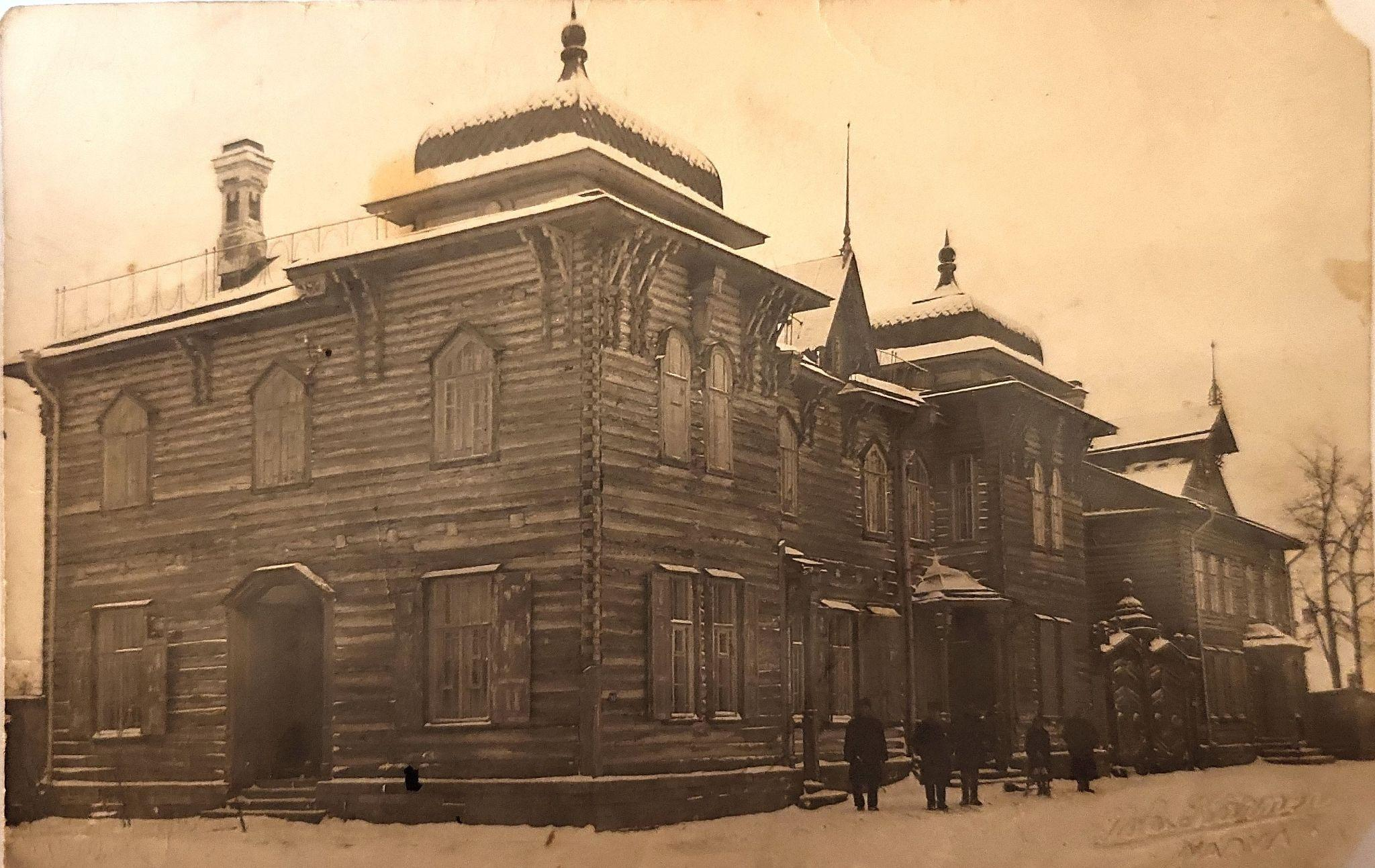
The Narva community building — the former North Estonian Bank — on a postcard.
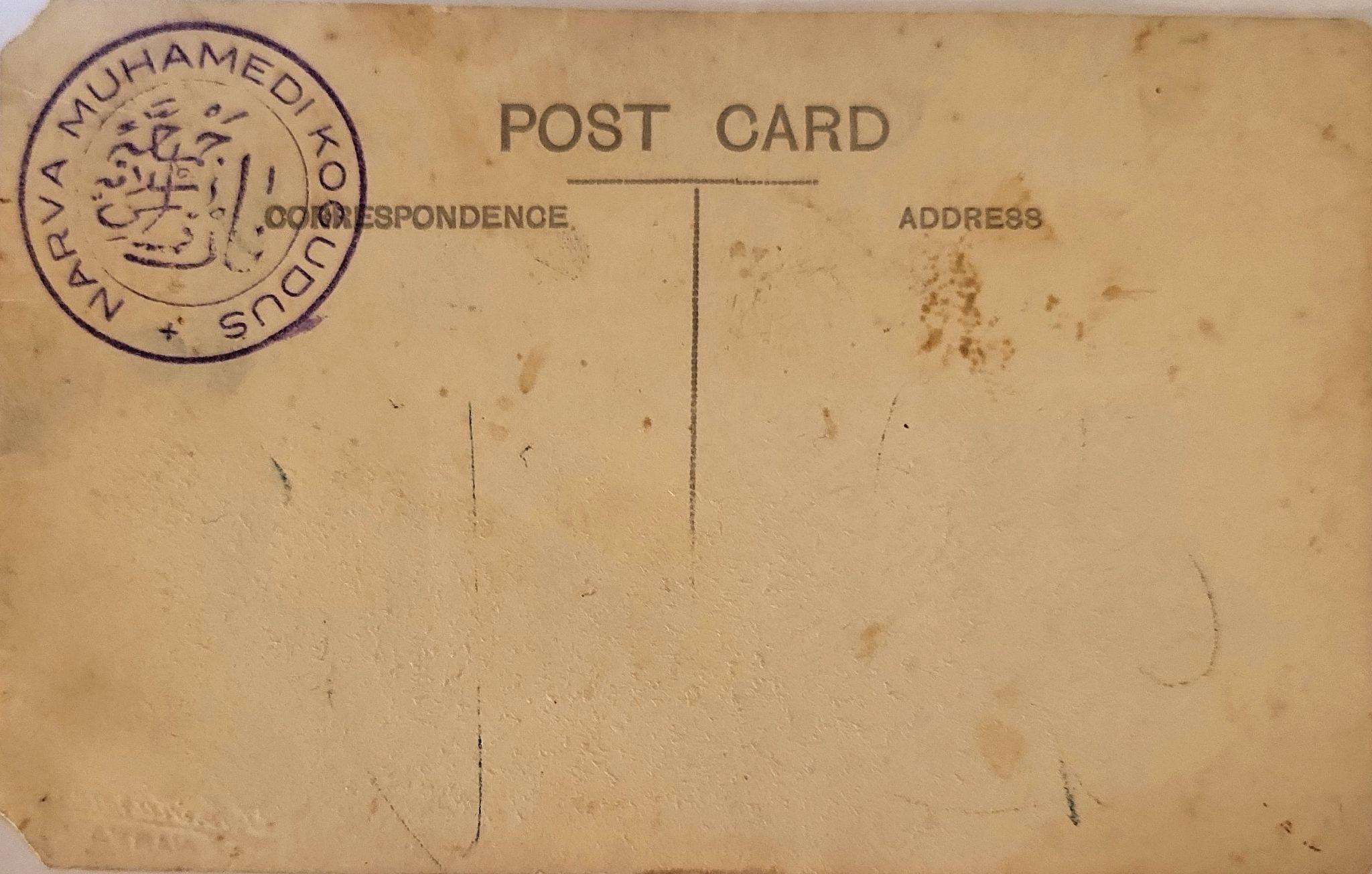
The other side of the postcard: a stamp reading “Narva Muhamedi Kogudus”.
Society and schooling
On 28 September 1928 the Narva Tatar Cultural Society was founded; its founder was Veliulla Fetkullin. Narva had a choir and staged plays. In the congregation's premises at Kiriku Street 2 an evening school for children was held — in March 1935 there were 25 children enrolled, with classes from 3 p.m. to 9.30 p.m. In summer the Tatars of Narva and Tallinn spent time at the Narva-Jõesuu resort, where children's summer schools were held; the last great gathering of the Estonian Tatars took place there in the summer of 1939.
Spiritual leaders
The religious life of Narva's Muslims was led by imam Mustafa Haerdinov. On special occasions the spiritual head of Finnish Muslims, Väliahmäd Hakim, visited Narva and Narva-Jõesuu. The community also included Zinnätulla Seifullin, who later became a leader of the Narva congregation.
War and the end of the community
Under the German occupation the Narva congregation was re-registered in 1943 — it had 81 members, and Zinnätulla Seifullin was elected spiritual leader. On 6–7 March 1944 the Soviet Air Force destroyed Narva by bombing; after the war the Soviet occupation authorities did not allow the former residents to return, but resettled Narva's whole population elsewhere. Narva's Tatars moved mostly to Tallinn and Rakvere — after which the Narva Tatar community ceased to exist. The Seifullin line, however, continued: in restored Estonia, Timur Seifullen became chairman of the Tatar Cultural Society, and the society began actively supporting the Republic of Estonia — including the independence movement in the years of its restoration.
See also
Sources: Toomas Abiline and Ringo Ringvee, 'Estonia', in Muslim Tatar Minorities in the Baltic Sea Region (Brill, 2016), pp. 105–127; eestitatarlased.ee.