The Narva Tatar cemetery
The Narva Tatar community had its own Islamic cemetery — as did the communities in Tallinn and Rakvere. Narva was, alongside Tallinn, the second centre of the Estonian Tatars, where by the community's own estimate about half of them lived. The Narva cemetery vanished together with the whole old Narva community — through the combined force of occupation, war and resettlement.
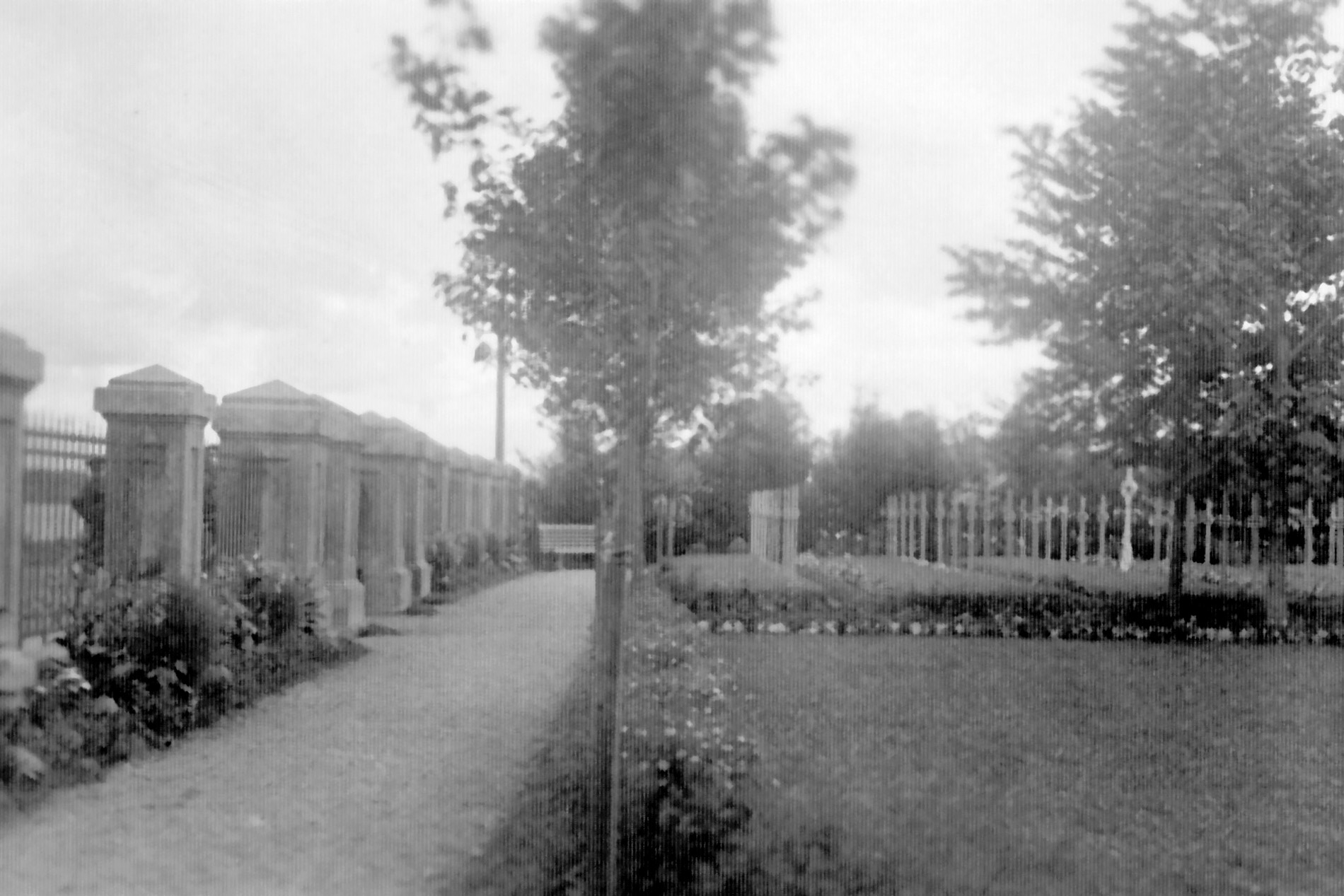
The Siivertsi cemetery in Narva, c. 1920–1941. The exact site of the Narva Tatar cemetery is unknown; this period photo shows a Narva cemetery of the time. Photo: unknown author (public domain), Wikimedia Commons.
The community and the cemetery
The survey in the Estonian Heritage Yearbook confirms that with the Tatar merchant activity that revived in the mid-19th century, Islamic cemeteries arose in Narva and Rakvere, besides the Tallinn one. The Narva Mohammedan Congregation was registered on 18 May 1928; the community ran a children's evening school in the premises at Kiriku Street 2 and spent summers at Narva-Jõesuu. In 1935 Estonia's first mosque opened on Kiriku Street in Narva.
Municipalisation and destruction
The 1940 Soviet occupation dissolved the Narva and Tallinn religious associations. The cemeteries owned by the associations in Tallinn, Narva and Rakvere were municipalised — the Rakvere cemetery handover act is dated 1 April 1941 (a document in Timur Seifullen's private archive). Under the German occupation the Narva congregation was re-registered in 1943 (81 members, Zinnätulla Seifullin as spiritual leader), but on 6–7 March 1944 the Soviet Air Force destroyed Narva by bombing. After the war the old Narva residents were not allowed back; the town was resettled and the Narva Tatars moved largely to Tallinn. With that the Narva Tatar community — and its cemetery — faded into invisibility.
The link to the wider pattern
The Narva cemetery belongs to the same story as the Tallinn Tatars' cemetery, the Jewish and the Baltic-German cemeteries: under the occupation the minority communities lost their burial grounds. See the overview of the razed cemeteries and communist crimes against Estonia's minorities.
See also
Sources: Carl-Dag Lige and Oliver Orro, “Places of eternity in the modern cityscape: Tallinn's abandoned cemeteries” — Estonian Heritage Yearbook (Muinsuskaitse aastaraamat) 2007 (Islamic cemeteries in Narva and Rakvere); Toomas Abiline and Ringo Ringvee, “Estonia” — Muslim Tatar Minorities in the Baltic Sea Region (Brill, 2016), pp. 105–127 (the Narva congregation, municipalisation, the 1941 Rakvere act).