The Estonian Tatar community in the Republic of Estonia (1918–1940)
The Estonian Tatars are chiefly Mišär Tatars who migrated to the territory of Estonia from the second half of the 19th century onward, mostly as merchants. During the interwar Republic of Estonia (1918–1940) their community flourished — above all in Narva and Tallinn, but also in Tartu and Rakvere. It was a rare cultural phenomenon in a Lutheran, Estonian-speaking environment.
How the community formed
A Tatar community on Estonian soil arose after the Great Northern War, when Tatars discharged from Russian military service settled here. In the 18th century, when Tallinn was a base of the Russian navy, many discharged sailors bought plots in the area of Tatari, Sakala and Liivalaia streets — hence the name of Tallinn’s Tatari (“Tatar”) street. A lasting merchant community, however, formed after the abolition of serfdom in Russia in 1861, when peasants who had gained freedom of movement took up trade; Tatar merchants arrived in Estonia.
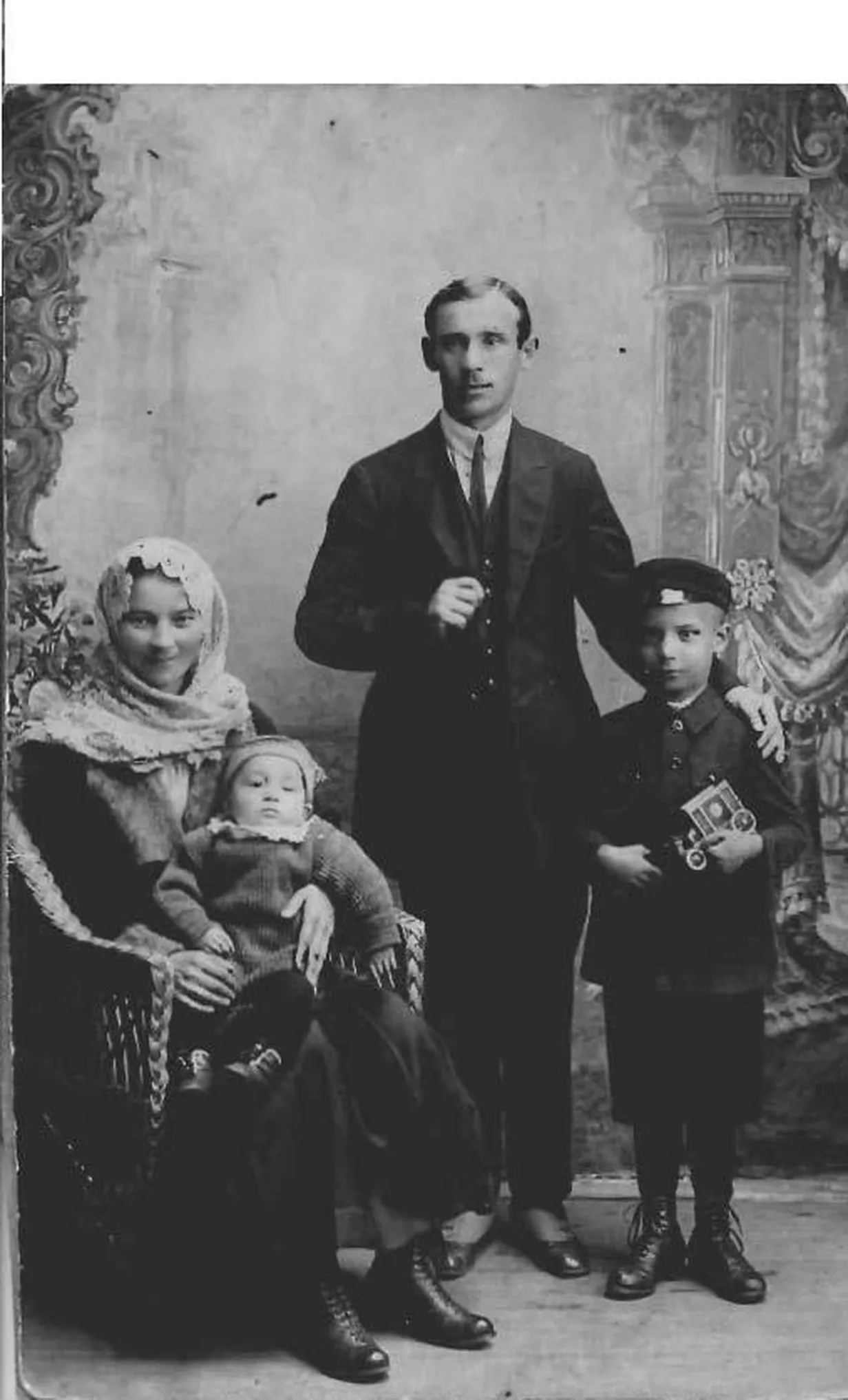
Zinätulla Säifulla (Seifullin) with his family in Narva in the 1920s. Photo: Tallinn City Museum.
Merchants
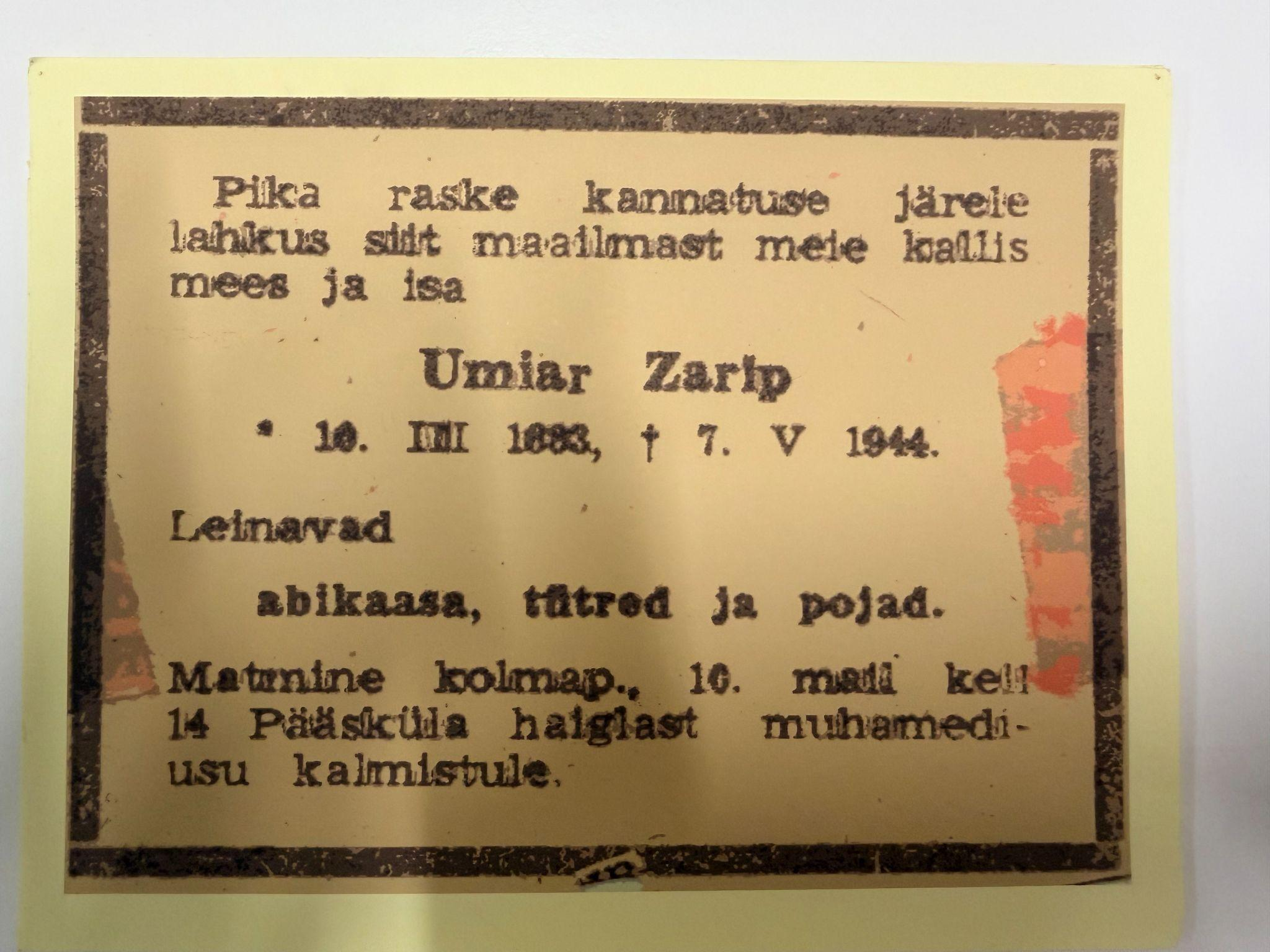
One of the first was the merchant Zäkir Zäkeri (Zakir Zakerov), who arrived in Tallinn from near Nizhny Novgorod in the 1870s and worked his way up to a successful businessman. The merchants took apprentices from their home villages, teaching them trade and Russian. The best-known Tallinn Tatar businessmen of the 1930s were the furrier Sibgadulla Mähdejev (shop on Gonsiori street), the lace merchant Umiar Zarip (shop at the corner of Sauna and Väike-Karja streets), and the furriers Hairulla Mähdejev (later Estonianized to Mehdi) and Fateh Zakerov.
Sibgadulla Mähdejev, the “king of the Tatars”
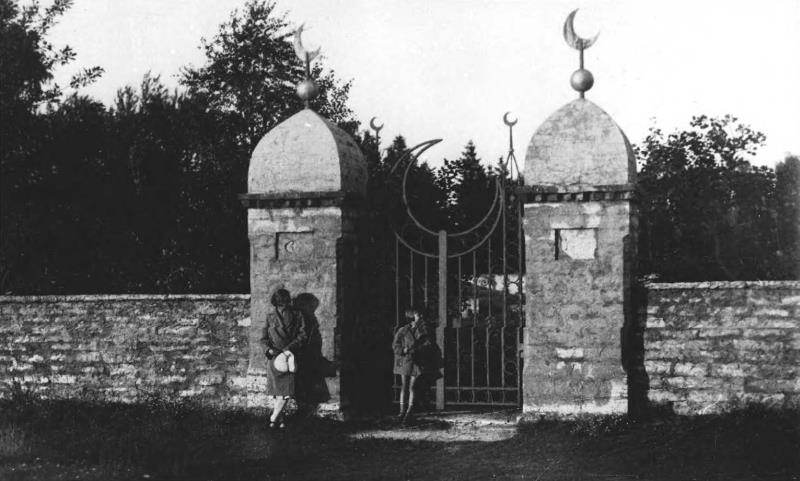
The most respected and wealthiest of the Tallinn Tatars was the furrier Sibgadulla Mähdejev, called the “king of the Tatars.” He was born in 1863 in the Nizhny Novgorod governorate and came to Tallinn in 1885. He traded in valuable furs, carpets and jewels and was already very wealthy in tsarist times. Mähdejev was an active supporter of the local congregation: in the early 20th century he established the Tatar cemetery next to Tallinn’s Siselinna cemetery, surrounded it with a stone wall and had a fine wrought-iron gate decorated with crescents forged for it. When Mähdejev died in 1939, Estonian newspapers announced: the king of the Tatars has died.
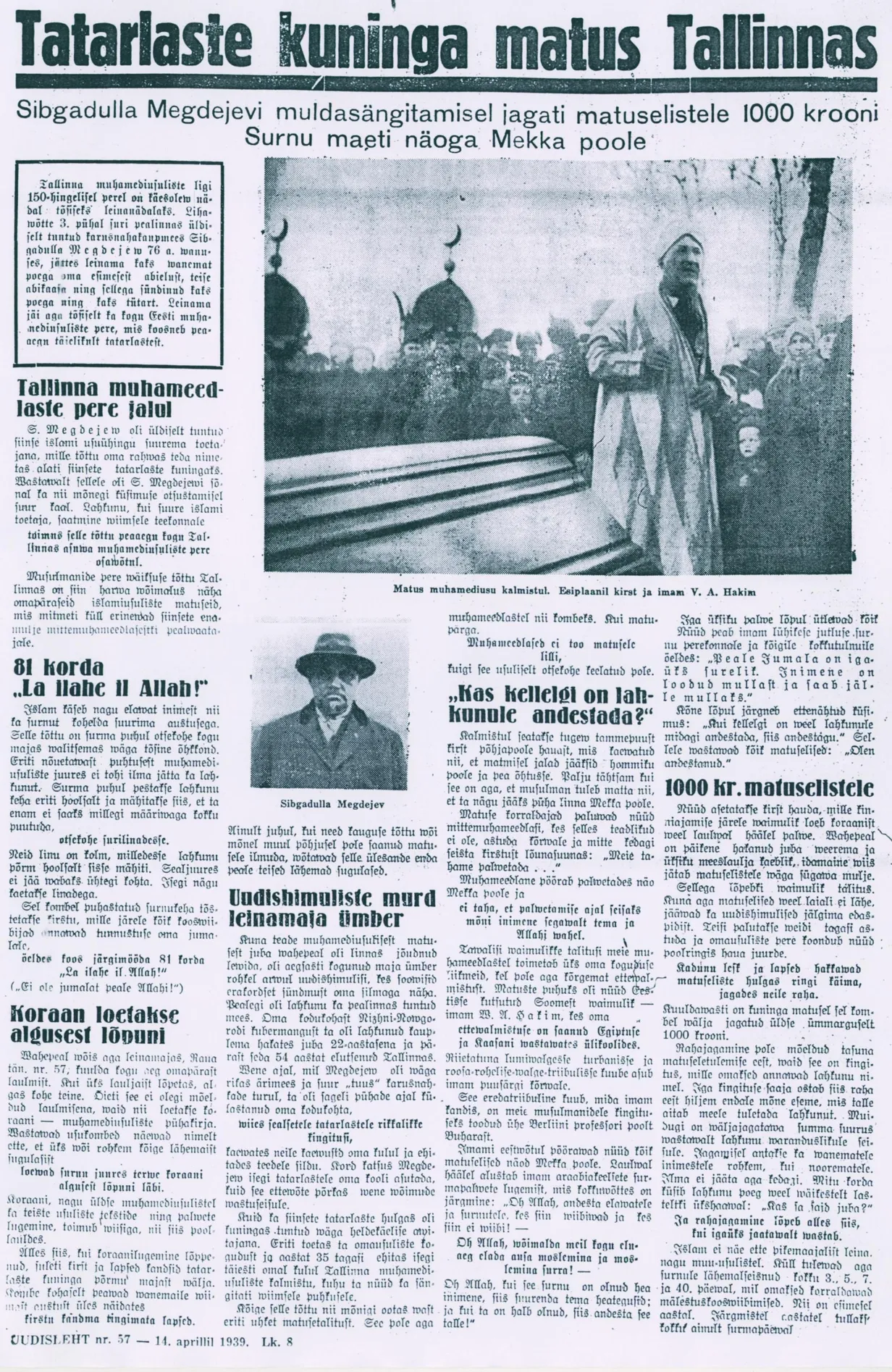
“The funeral of the king of the Tatars”: Sibgadulla Mähdejev's funeral, Uudisleht, 14 April 1939. Photo: Tallinn City Museum.
The names and their origins
In historical documents the Estonian Tatars' names often appear in a russified form — with the Russian endings -ov, -ev or -in. Their original form, however, is Tatar-Arabic. In the community's own tradition and at exhibitions (such as the one at Narva Castle) the names are used in their Tatar form; the original name forms are preferred here too, with the russified form in parentheses.
Säifulla (doc. Seifullin) — Arabic Sayf Allah, 'the sword of God'. E.g. the merchant Zinätulla Säifulla.
Zäkir Zäkeri (doc. Zakir Zakerov) — the name Zäkir comes from the Arabic dhikr (the repetition of God's names or prayers on prayer beads). The sound dh (like English th) did not exist in Tatar and became z. The name also echoes that of the prophet Zachariah.
Adiätulla (doc. Adiatulla) — from adät ('custom, tradition'; of Arabic origin, tied to the notions of hadith and sunnah, which Sunni Muslims — including the Tatars — follow) and ulla (= Allah). Roughly 'follower of God's traditions'.
Ähmät Hajreddin (doc. Ahmed Haerdinov) — a name of Arabic origin (Ähmät = Ahmad).
Mähdi (doc. Mähdejev) — according to community tradition, Sibgadulla Mähdejev's surname derives from the name Mähdi (al-Mahdi, an important figure in Islam).
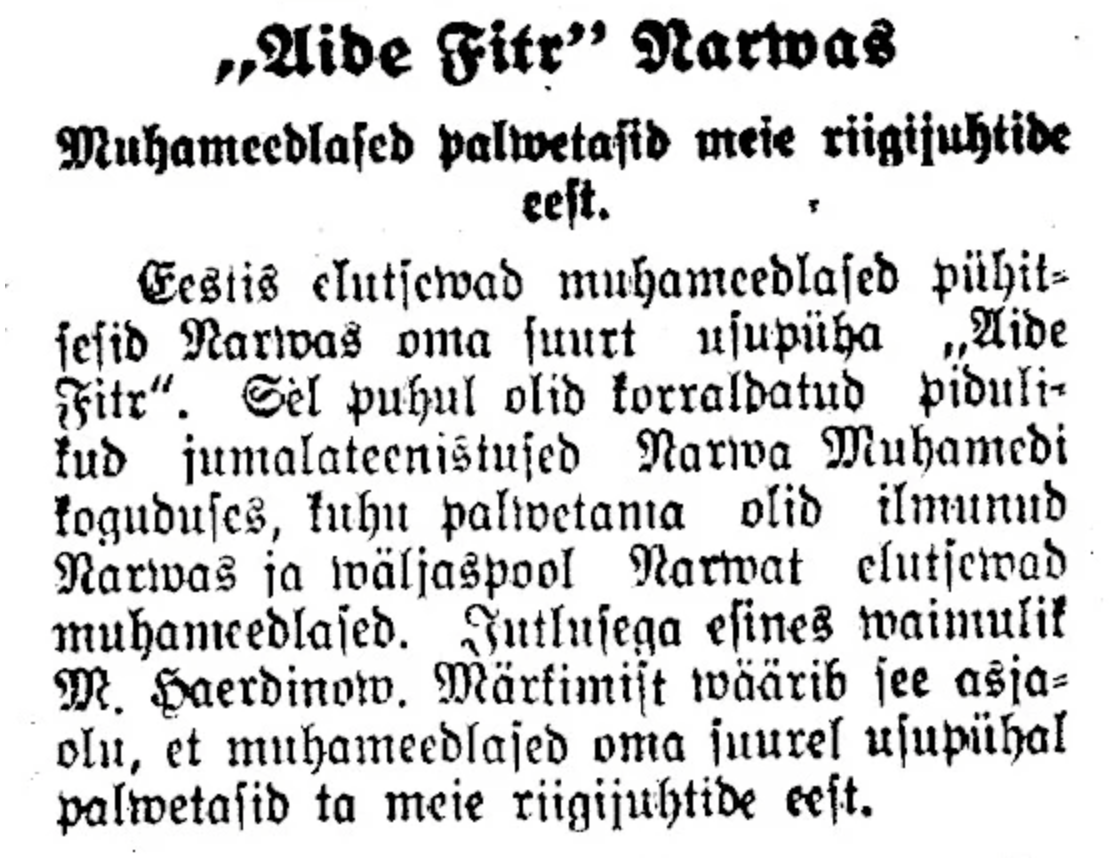
Prayer vocabulary. Täspe (Arabic tasbih) are prayer beads, used to count the dhikr — the repetition of God's names a set number of times. The feast at the end of the fasting month is Eid al-Fitr in Arabic, Uraza bäiräm in Tatar.
Population
According to the 1934 census, 170 Muslims lived in Estonia, of whom 166 were Tatars. The community itself thought the true figure was about 180, half of them in Narva and half in Tallinn.
Religious life
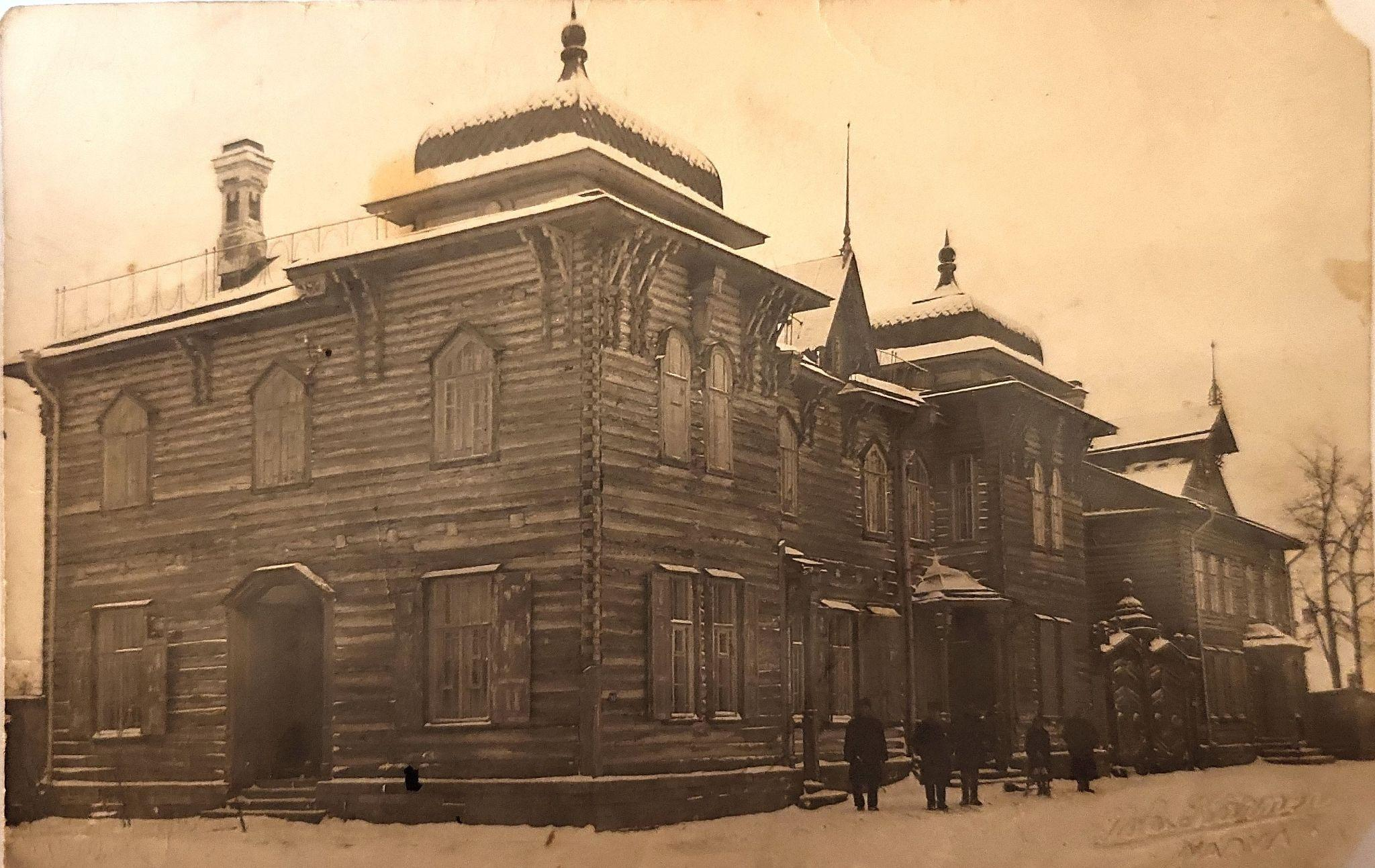
In the early 20th century the community rented rooms for religious festivals and prayers in Tallinn’s fire station near present-day Viru väljak. The Narva Muslim Congregation was registered on 18 May 1928 and re-registered as the Narva Muslim Society in 1937; the Tallinn Muslim Society was registered on 13 March 1940. In Narva the community adapted the former North-Estonian Bank building as its religious centre. In Tallinn religious life was led by the mullah Adiatulla Minahztetin, who lived in Mähdejev’s house at Raua street 57; communal prayers were held at Raua 57 and on the second floor of the Sube bathhouse (Sube 4). The mullah led Friday prayers, named children, performed marriage ceremonies and buried the dead.
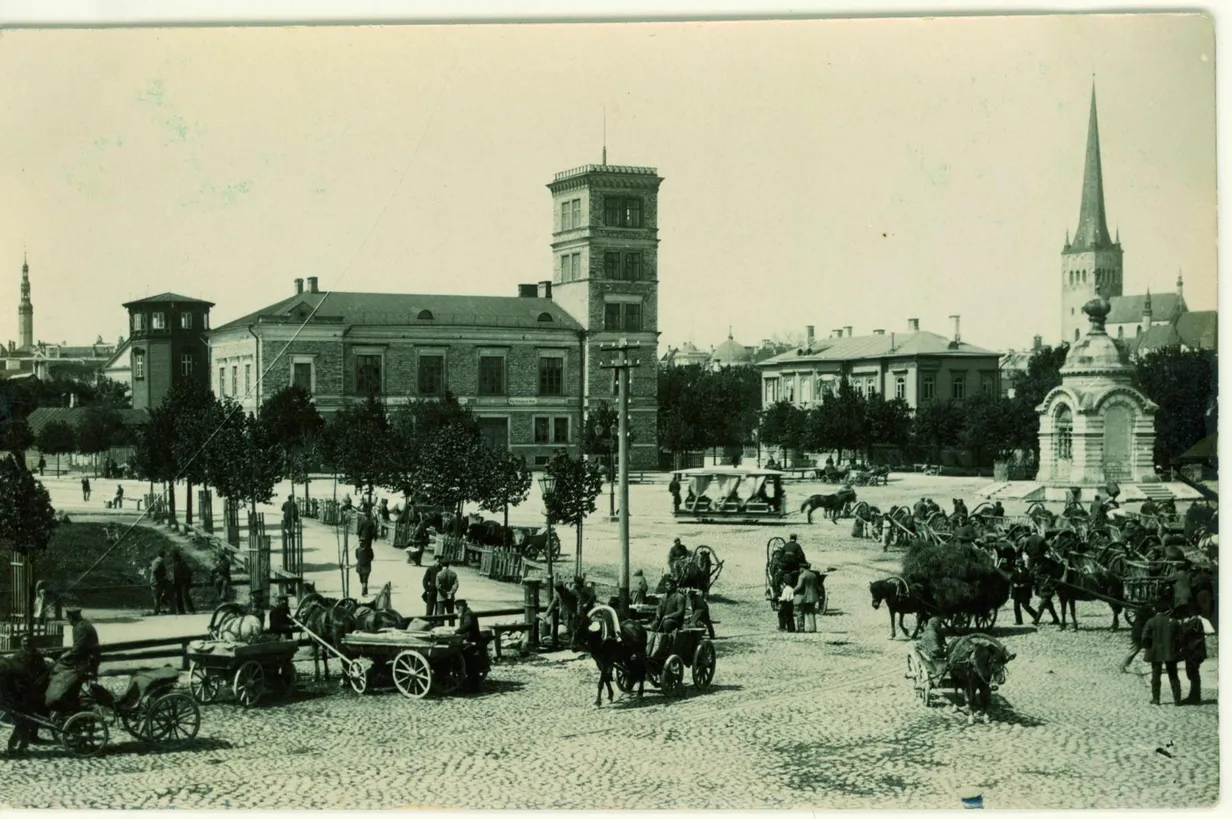
The fire station by the Russian market, where Muslims held prayers in the early 20th century. Photo: Tallinn City Museum.
The Narva community building
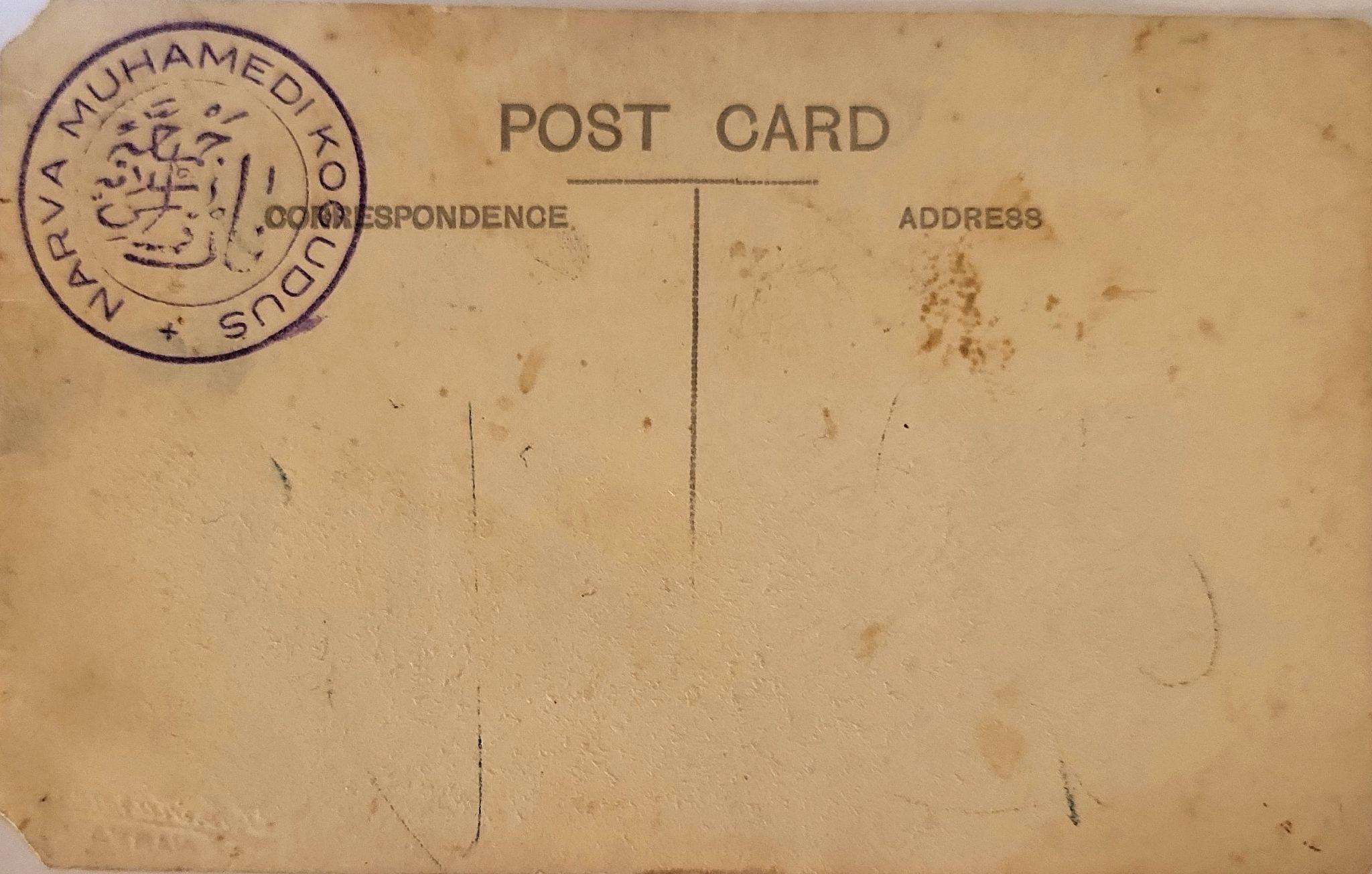
About half of the Estonian Tatar community lived in Narva. The Narva Muhammad Congregation was registered on 18 May 1928 and renamed the Narva Muhammad Religious Society in 1937. As its religious and community centre the community adapted the former Northern Estonian Bank building, where prayers and gatherings were held — it was the heart of Narva Tatar life until the Second World War.
In the bombing of the Second World War (1944) the building was destroyed along with much of Narva's old town. Unlike many other European cities, the the Soviet occupation authorities did not allow Narva to be rebuilt but demolished the surviving old town and barred former residents from returning. The community building was never restored; many Narva Tatars moved to Tallinn and Rakvere, which hastened the community's disappearance.
The Tatar cemetery in Tallinn
In the early 20th century the furrier Sibgadulla Mähdejev established a Tatar cemetery next to Tallinn's Siselinna cemetery. He enclosed it with a stone wall and had a fine wrought-iron gate decorated with crescents forged for it. The cemetery was the Tallinn Tatar community's own burial ground, where the departed were buried according to Islamic custom facing Mecca. The low-lying cemetery, near the river, was kept dry by a drainage system.
During the Soviet occupation the cemetery was destroyed. The drainage was damaged in the bombing of Tallinn and the occupation authorities refused to allow it to be repaired — the land had been expropriated and the authorities had other plans for it — letting the cemetery flood continuously until it turned to mud. Plots were offered instead at the Liiva cemetery, and the Tatar community had to dig up and rebury their relatives themselves — some had to keep the bones in a cellar in the meantime. Older Tatars have traumatic memories of this. A motor depot was built over the old cemetery; it stands near the present-day Bronze Soldier monument.
Cultural and social life
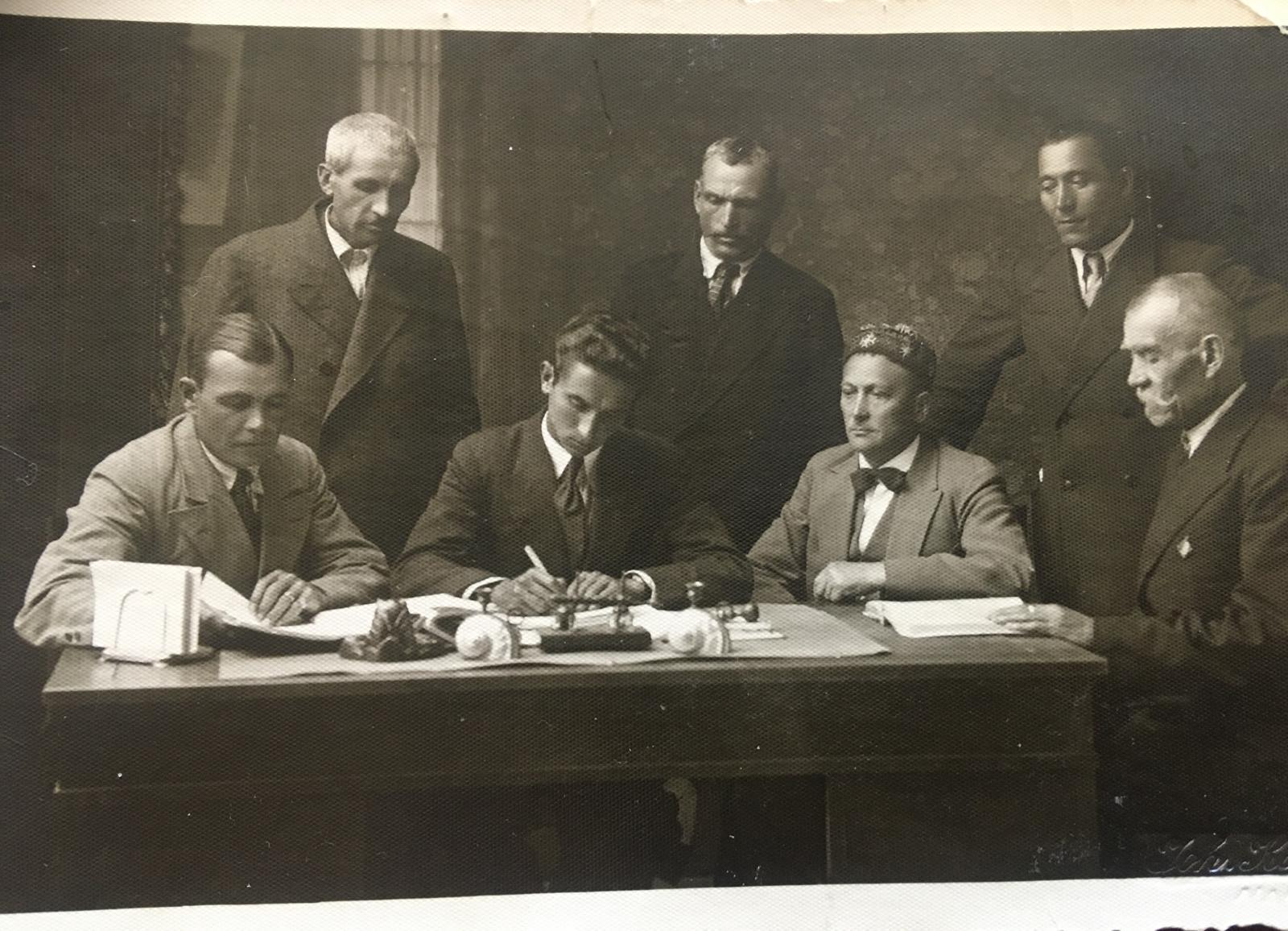
The Tatars’ social life was active. A Tatar Cultural Society operated, its board made up of respected Tatar men. Gatherings were held with Tatar music, dancing and a great deal of singing; there were an older men’s choir and a youth choir. The society organized trips to Finland, where a large Tatar community also lived. The last great gathering of the Estonian Tatars took place in the summer of 1939 in Narva-Jõesuu, where almost all Estonian Tatars were represented. A Sunday school operated in Mähdejev’s house at Raua 57, teaching children the alphabet as well as the basics of Islam and Tatar history and culture. They spoke Tatar among themselves, and Tatar-language literature was found in their homes.
On 28 September 1928 the Narva Tatar Cultural Society was founded; its founder was Veliulla Fetkullin.
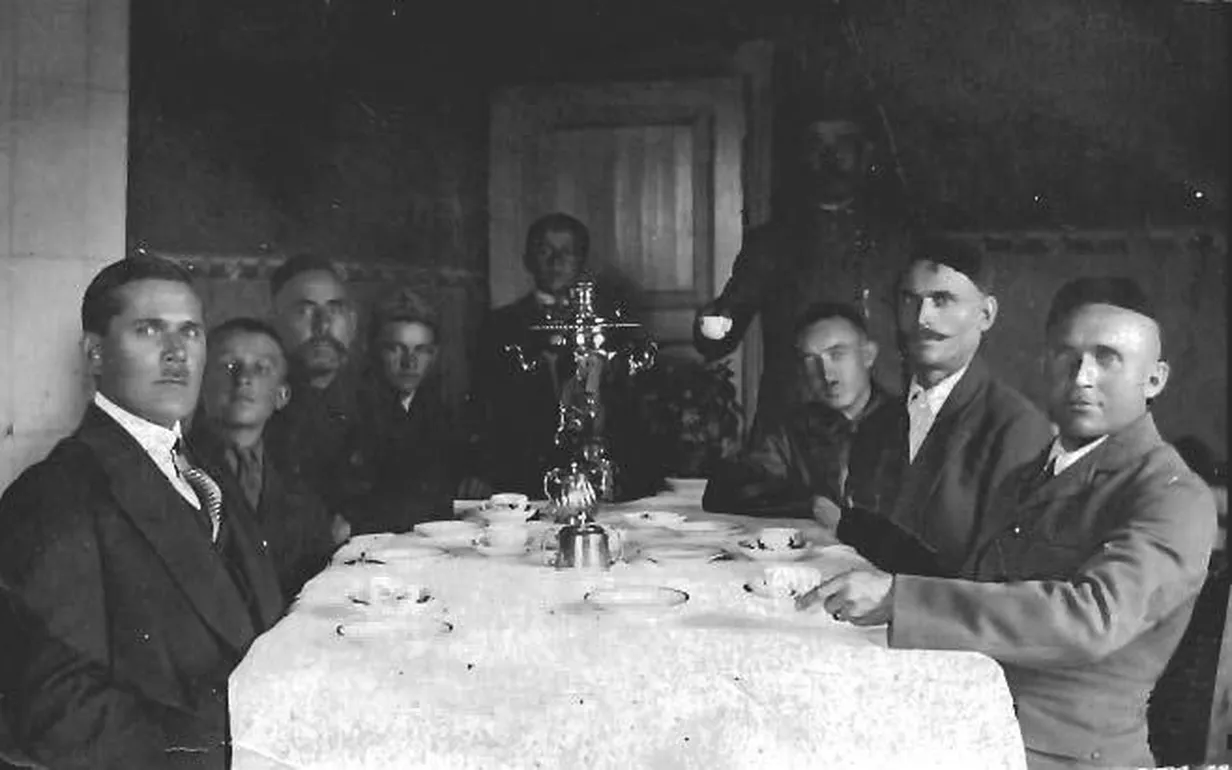
The house owned by Sibgadulla Mähdejev at Raua 57, where the Sunday school operated. Photo: Tallinn City Museum.
Everyday life in the 1930s
The Tatars kept in close contact, especially during holidays. Alongside the Islamic lunar calendar they used the Christian calendar, and besides the Islamic feasts they also marked Christmas and Easter — no tree was brought indoors, but gifts were given and eggs were coloured. The Islamic requirement of alms was met in money or clothing; the poorer were invited to eat and had their debts cleared. Homes did not differ much from those of Estonians: carpets on the walls, a samovar in the place of honour, a great deal of tea; the Quran was placed in the place of honour. Pork was not eaten; horse meat was eaten in quantity and made into sausage. Tatars generally married within the community; mixed marriages were rare. Women mostly did not work outside the home, and divorces did not occur before the Second World War.
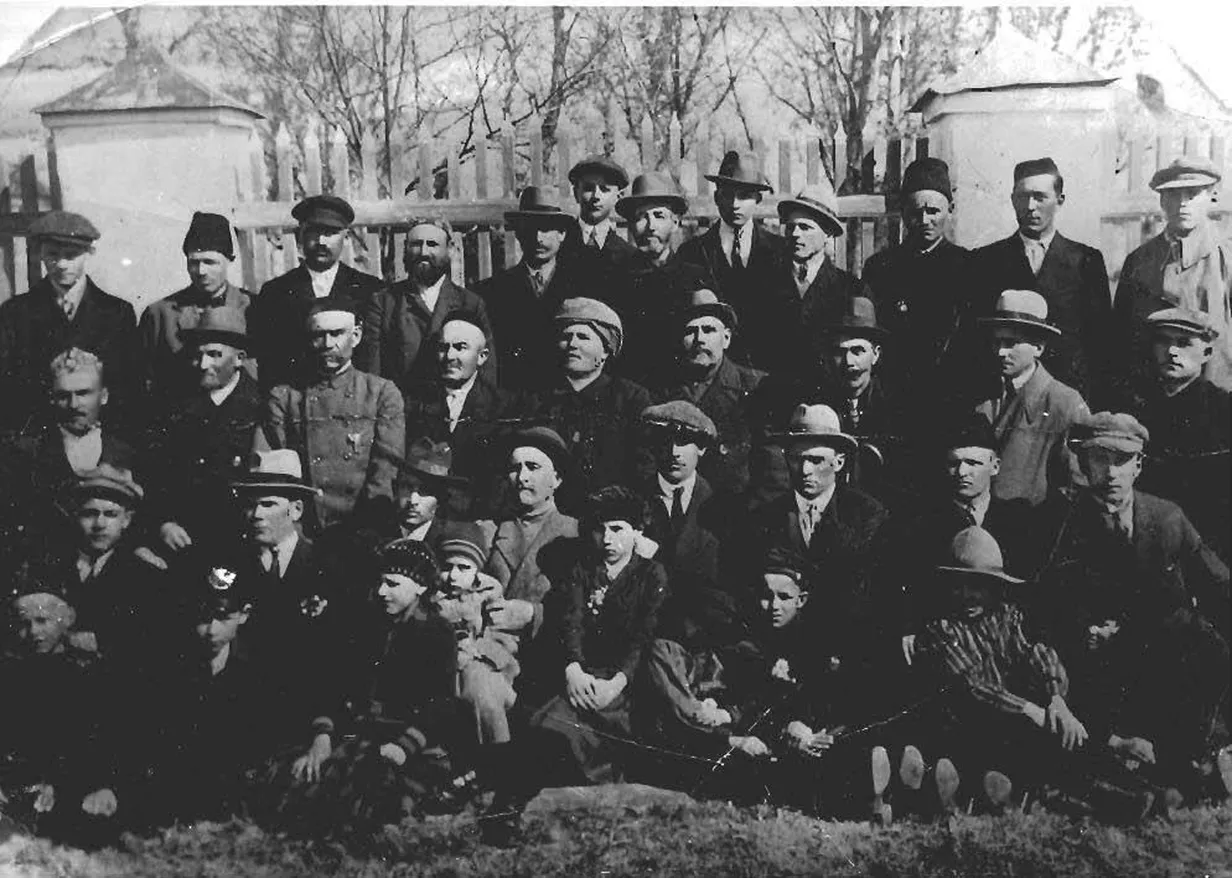
Narva Tatars at the Siivertsi cemetery on a religious holiday in the 1920s. Photo: Tallinn City Museum.
Freedom and loyalty to Estonia
The historian Toomas Abiline has documented that the Tatars enjoyed an environment remarkably liberal for its time, in which their culture, language and customs could survive and even thrive. At the Eid al-Fitr prayers in Narva in 1936 the community prayed for the government of Estonia.
The Volga Tatar imam Alimdžan Idris, who visited Estonia and taught the local Tatars Arabic, was surprised at the good situation of the local community. In his 1934 address to the local Tatars he said:
You live now in Estonia. The current government of the Estonian Republic does not have any connection with previous tsarist or current Soviet Russia, where Muslims were and are secondary citizens. The Constitution of the Republic of Estonia gives minority nationalities the same rights as the native population, and this principle has been followed by the government and other executive powers. There are no Muslims who could complain that the government has committed injustices against them. Consider the Estonian Republic as your state!
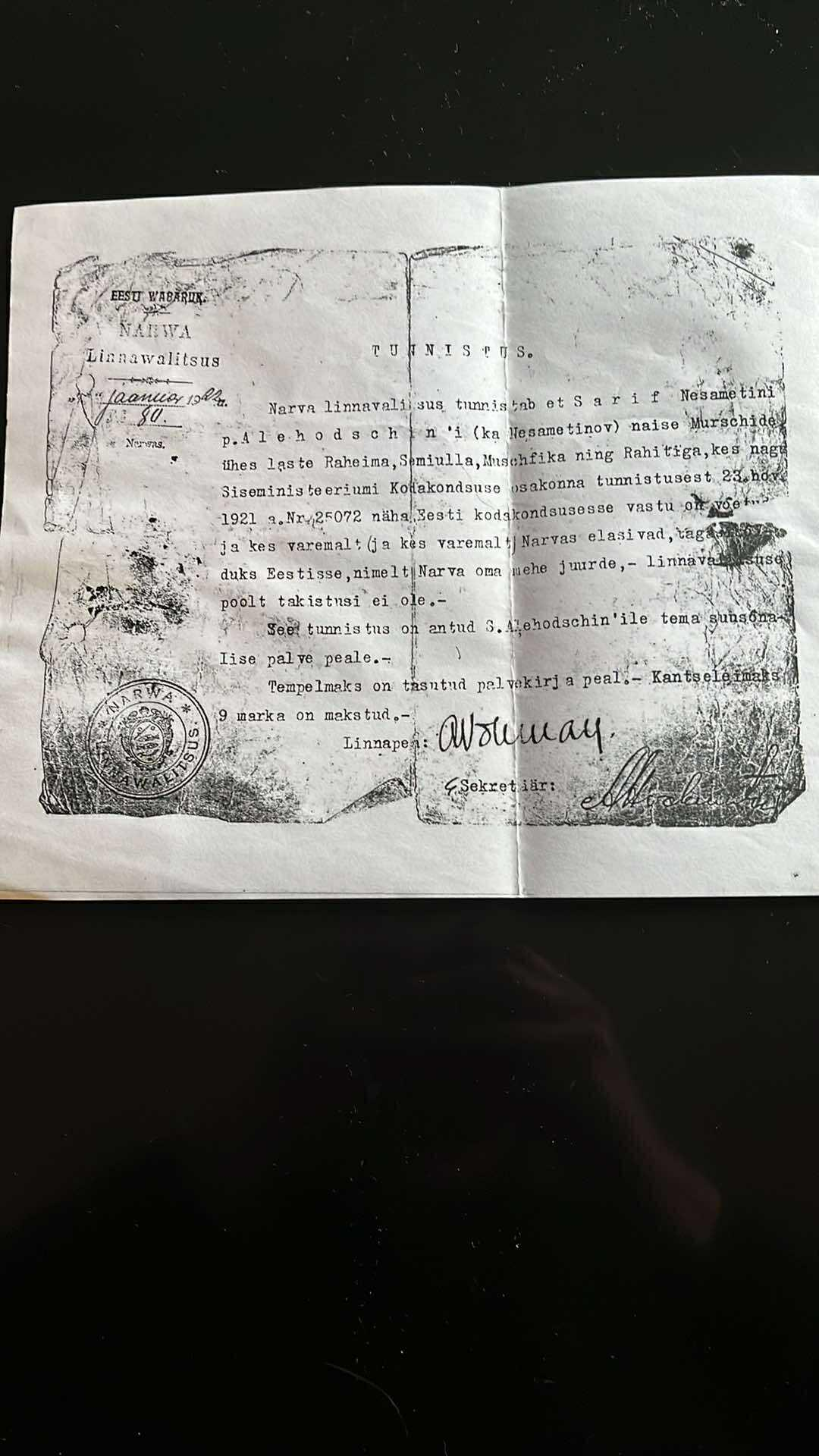
A certificate from the Narva city government (1934): the Republic of Estonia confirming a Tatar family's Estonian citizenship and right to live in Narva.
Foreign-Estonian Tatars and the Finnish Boys
During the Second World War and the occupation, part of the Estonian Tatars fled westward. Their descendants, who integrated into the exile Estonian communities in Sweden, the United States and Australia, are called Foreign-Estonian Tatars; unlike the community that stayed in the homeland and faded under the occupation, they were able to continue their activities in freedom.
Three Estonian Tatars served in the Finnish military in the Continuation War and are known as “Finnish Boys”: Ibrahim Zarip (Finnish Navy, later Sweden and the United States), Ahmed Haerdinov and Rafik Moksanov (later Raffi Moks in Canada). After the war, those who had fled to Finland often had to move on, since the peace treaty between Finland and the Soviet Union contained a clause for the return of “people of the Soviet Union.”
In exile the foreign-Estonian Tatars contributed to the exile Estonian communities and do so to this day. Ibrahim Zarip was a co-founder of Sweden’s first Muslim organization (1949), was active — alongside Johannes Mihkelson and Gustav Suits — in the foreign section of the Estonian Socialist Party against the Soviet occupation, and helped put the paperwork for the New York Estonian House in order for ESTO ’92; Umugulsum Zarip worked as a physician in New York, including in veterans’ hospitals; one Finnish Boy became a figure for freedom in Canada as a Scoutmaster of the exiled Estonian Scouts. Foreign-Estonian Tatars regularly attend Estonian Song Festivals, travelling there from across the world.
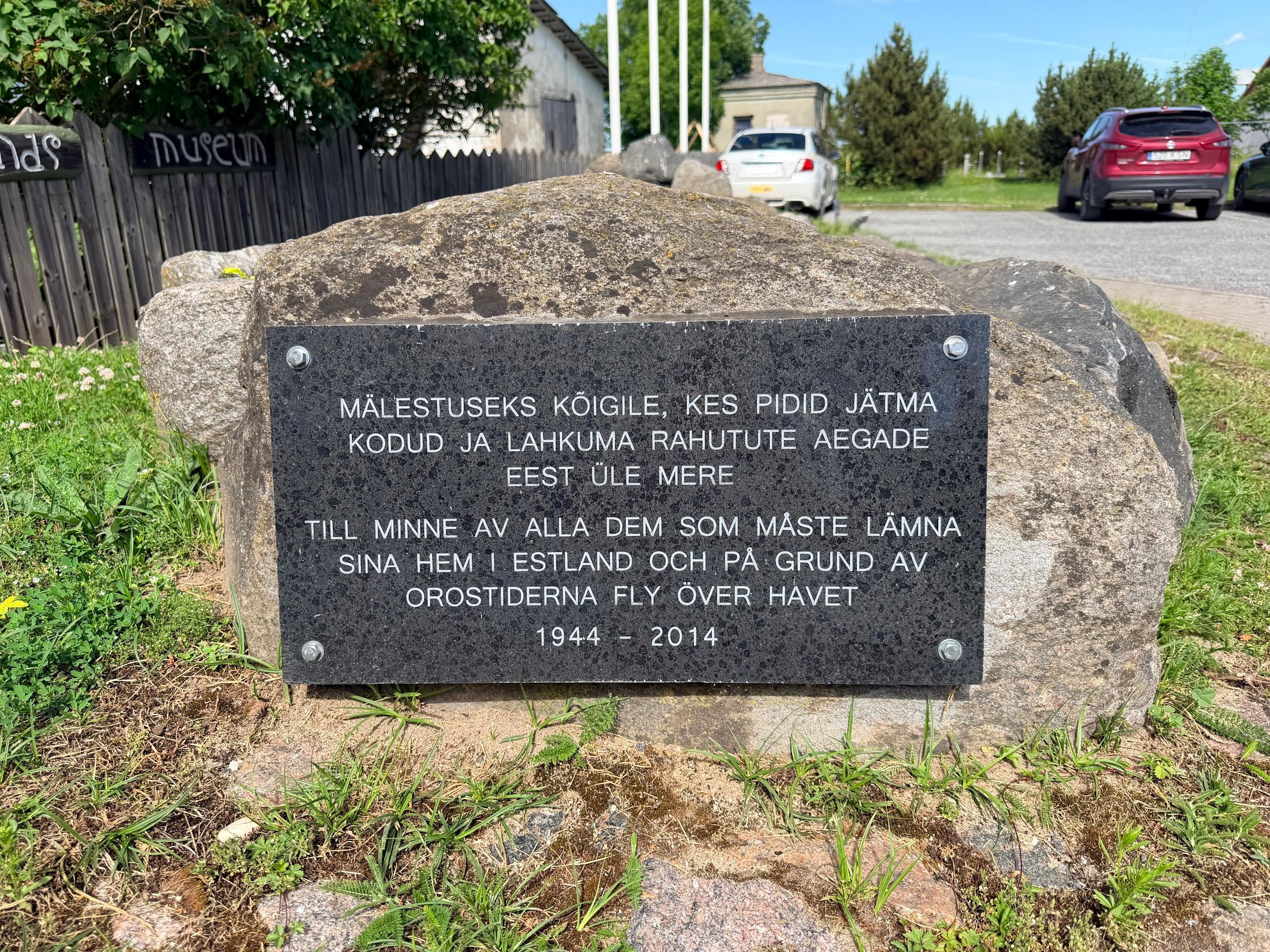
A memorial stone to all who had to leave home over the sea in troubled times (1944–2014).
The end of the community
This flourishing ended with the 1940 Soviet occupation and the Second World War. Under the occupation the community and its culture faded — a process described in full in the article “The cultural genocide of the historical Estonian Tatars.” The main losses were the following.
The ban on organizing and the decline of the language
Cultural and national organizations were prohibited, removing the means to preserve the language. In Russia, Stalin imposed the Cyrillic script on the Tatar community, so the Estonian Tatars had to switch to material in Cyrillic — unlike the Finnish Tatars, who kept the Latin script. It was not possible to produce their own material on any meaningful scale, and the use of the Tatar language declined for good.
Assimilation
The Estonian Tatars mostly survived by assimilating closely with Estonians, losing ties to their Tatar heritage; many changed their names to Estonian ones. Some older Tatars still refuse to speak Tatar or to acknowledge their background. Tatarophobia remains active in Russia and in Russian-speaking communities.
See also: The Estonian Socialist Party's Foreign Association (ESPVK).
Sources: Toomas Abiline, “Estonian Muslims have the best memories of the pre-war Republic of Estonia” (Postimees, 21 March 2025); Islam in Estonia, Finnish Tatars; family tradition.
Images from the book