The Baltic German heritage belongs to Estonia
Karl Ernst von Baer, founder of embryology. Fabian von Bellingshausen, discoverer of Antarctica. Krusenstern, Kotzebue, Seebeck, Lenz, Uexküll — a line of world-changing names, born on Estonian soil, yet belonging to the Baltic German minority and often serving foreign crowns. Whose heritage is theirs? This page argues: Estonia's. Because Estonia honoured its minorities — and it was not Estonia but the totalitarian powers that destroyed the community.
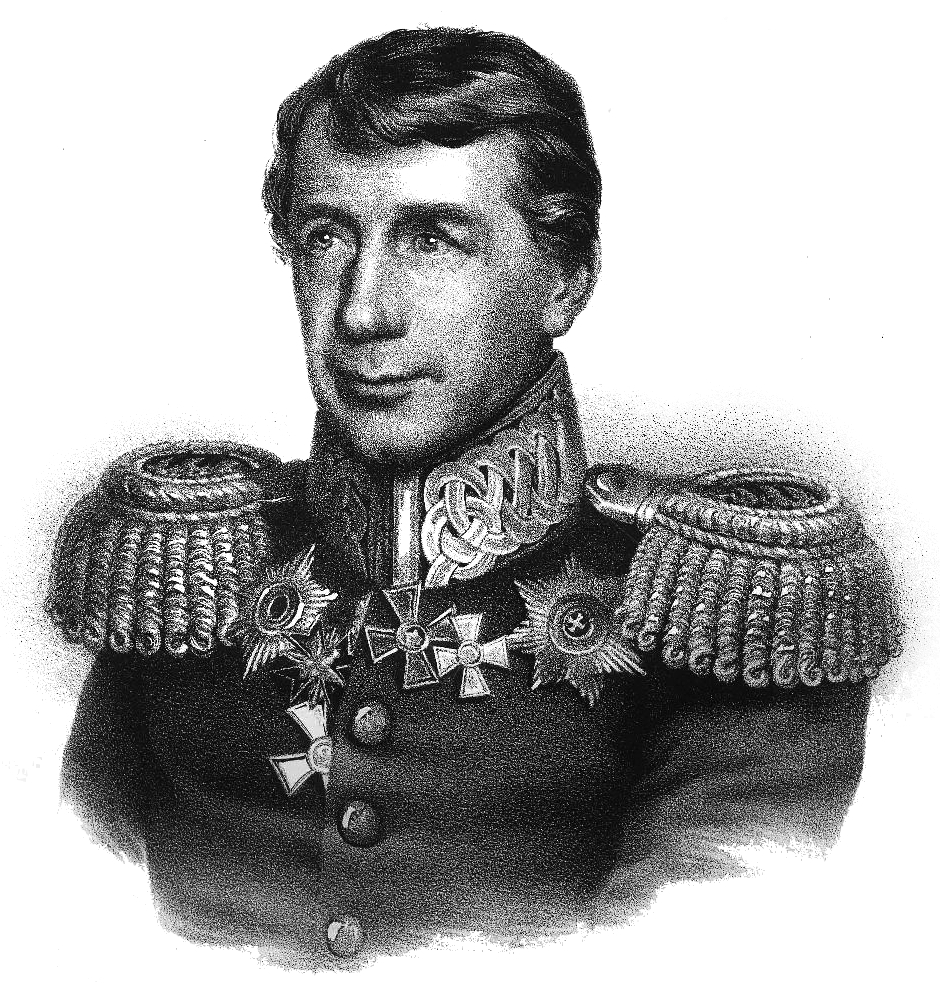
Adam Johann von Krusenstern — leader of the first Russian circumnavigation, a Baltic German.
Seven centuries on Estonian soil
The Baltic Germans lived on Estonian territory for nearly seven centuries — as nobles, merchants and scholars. Many served the Swedish or Russian crown, but their achievements were rooted in Estonian soil: at the University of Tartu, in the manors and towns of this land. So it was on Estonian soil that the founder of embryology Karl Ernst von Baer, the discoverer of Antarctica Fabian von Bellingshausen, the leader of the first Russian circumnavigation Adam Johann von Krusenstern, the physics classics Thomas Johann Seebeck and Emil Lenz, and the father of biosemiotics Jakob von Uexküll were born — all Baltic Germans. Their stories are told at greater length in Estonian science that changed the world and Explorers from Estonia.
How Estonia honoured its minorities
The pre-war Republic of Estonia treated its minorities with rare respect. The 1925 Cultural Autonomy Act gave national minorities the right to run their own cultural and educational affairs; under it, German and Jewish cultural self-governments were established. The law was regarded across Europe as a model — one of the few working examples of how a state can honour its minorities. The same tolerance sheltered the culture of the Estonian Tatars, the coastal Swedes and other minorities (see The Estonian Tatar community in the Republic of Estonia (1918–1940)).
How the totalitarian powers destroyed the community
The end of the Baltic German community was brought not by Estonia but by two totalitarian powers — through one and the same pact. After the 1939 Molotov–Ribbentrop Pact, Hitler demanded the resettlement of the Germans into the Reich (“Heim ins Reich”): from October 1939 to May 1940 more than 14,000 Baltic Germans left Estonia, and in the 1941 later resettlement about 7,000 more. So a community of nearly seven centuries came to an end. And the few who stayed in Estonia were caught by the Soviet occupation: the USSR deported even the last Baltic Germans who remained, as it deported and destroyed Estonians of every nationality alike. The pact that scattered the community was signed by both powers — Hitler and Stalin.
Of those two powers, only one has a successor that still exists. Nazi Germany was defeated, and its successor — today's Germany — has acknowledged its crimes and apologised for them. The continuator state of the Soviet Union, however, is the Russian Federation: in 1991 Russia took over the USSR's seat on the UN Security Council, along with its treaties, debts and assets, continuing in international law as the same state. That same continuator state has not condemned the Molotov–Ribbentrop Pact that set the scattering of the Baltic German community in motion — in recent years it has publicly justified it. So the disappearance of the Baltic Germans is not merely the past: the power whose predecessor destroyed the community still exists, in the form of today's Russia — and has not disavowed it.
Why the heritage belongs to Estonia
The achievements of the Baltic Germans were born of Estonian soil and Estonian tolerance. The empires they served, and the powers that destroyed their community, are not the heirs of that heritage. The heir is Estonia — the land that honoured them as a minority and that keeps their memory alive to this day. That is why the Baltic German heritage belongs to Estonia's story: not to the conquerors nor the destroyers, but to the people among whom it was born.
See also
Estonian science that changed the world, Explorers from Estonia, The Molotov–Ribbentrop Pact, The Treaty of Tartu.
See also: Estophilia.
Sources: Baltic Germans (Wikipedia); Umsiedlung (Estonica); The Estonian Cultural Autonomy Law of 1925 (Nationalities Papers, Cambridge). On the succession of the Soviet Union: Succession of the Soviet Union (Wikipedia); How Putin is Rehabilitating the Nazi–Soviet Pact (FPRI).