Tallinn's old Roman-Catholic cemetery
Tallinn's old Roman-Catholic cemetery — known popularly as „Poolamägi” (Poland Hill) — lay as part of the Inner City necropolis. It is one of the minority congregations' burial grounds razed by the Soviet occupation authorities; see the overview of Estonia's cemeteries.
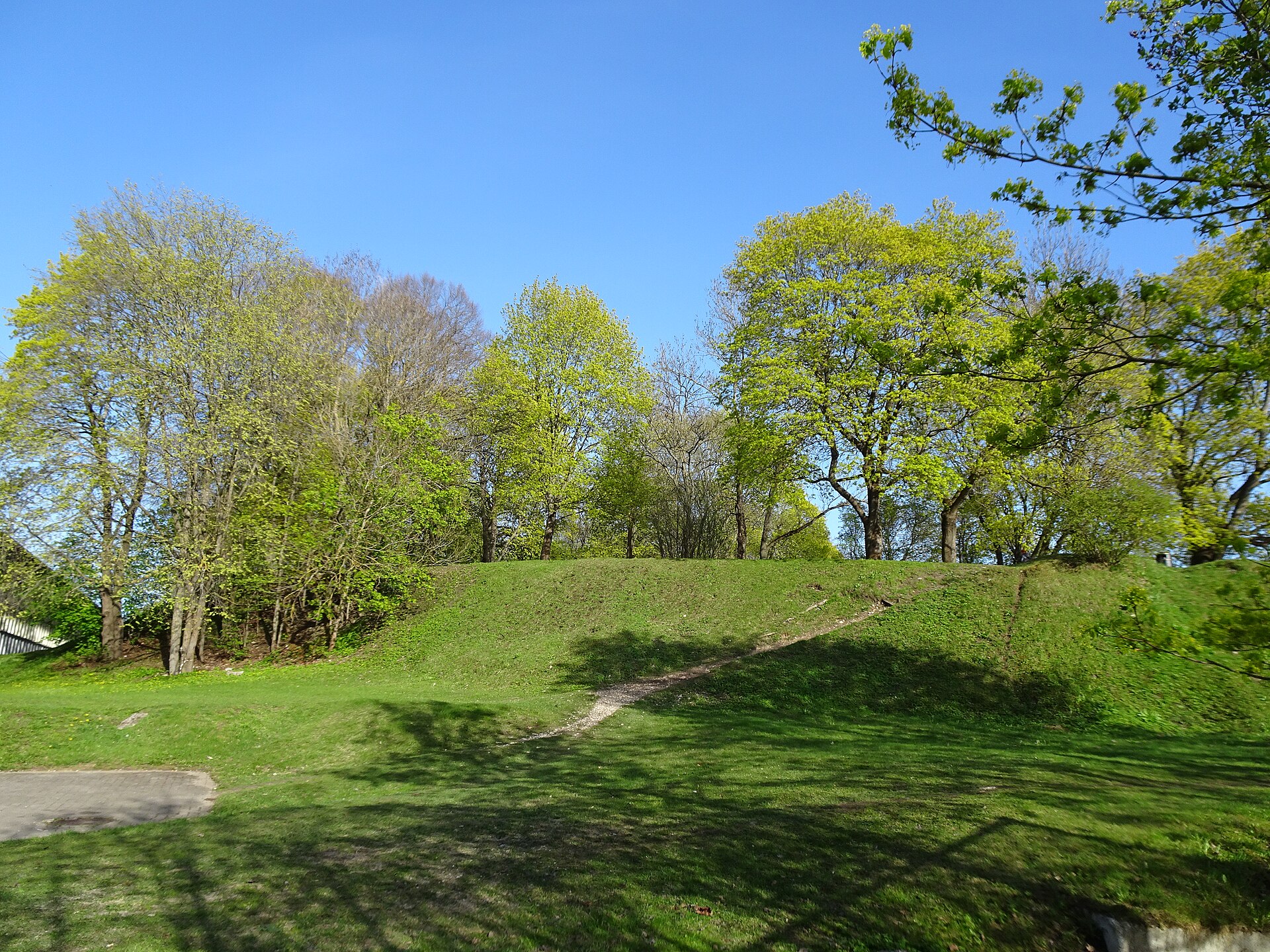
Poolamägi — the grounds of Tallinn's old Roman Catholic cemetery. Photo: Velirand (CC0), Wikimedia Commons.
The community and its look
The cemetery served Tallinn's Roman-Catholic community. By the grave inscriptions, people of Polish, German, French, English and Russian origin were buried there, and in the 1930s–1950s also Estonians and Lithuanians; the congregation had a separate 30 m² plot for its priests. A 1930s inventory counted 44 fenced plots and at least 54 crosses (11 of marble, 5 cast-iron) and grave monuments on six plots.
Among the buried were many soldiers, most of Polish origin, and several Baltic-German barons. Better-known figures resting here included the court councillor Josef Bahrynowsky (in a chapel), the state councillor Baroness Gabriele von Brinckmann (1790–1863, born a princess of Hohenlohe-Schillingsfürst-Waldenburg), the barons Johan Georg Gustav Kaulbass (1808–1883) and D. Evald von Henning (1829–1890), and the actress Marie Koch-Lipp (1832–1892). In 1925 a new gatekeeper's house was built to the engineer H. Wiikmann's design.
Destruction
The cemetery was closed for burial in 1955 together with the rest of the Inner City cemetery. In the same year Eesti Projekt drew up a tennis-stadium project on Herne Street (architect P. Tarvas) that took in the Catholic cemetery grounds and foresaw replanning it as a park. Although the stadium was only partly built, the landscaping programme was fatal to the cemetery: the chapel and gatekeeper's house were demolished and a grand limestone stair laid down the western slope to Herne Street. Only a single grave marker survives today.
See also
Sources: Carl-Dag Lige and Oliver Orro, „Places of eternity in the modern cityscape: Tallinn's abandoned cemeteries” — Estonian Heritage Yearbook (Muinsuskaitse aastaraamat) 2007.