The Rakvere Tatar cemetery
The Rakvere Tatar community had its own Islamic cemetery — as did those in Tallinn and Narva. According to the Estonian Heritage Yearbook, with the Tatar merchant activity that revived in the mid-19th century, Islamic cemeteries arose in Narva and Rakvere, besides the Tallinn one.
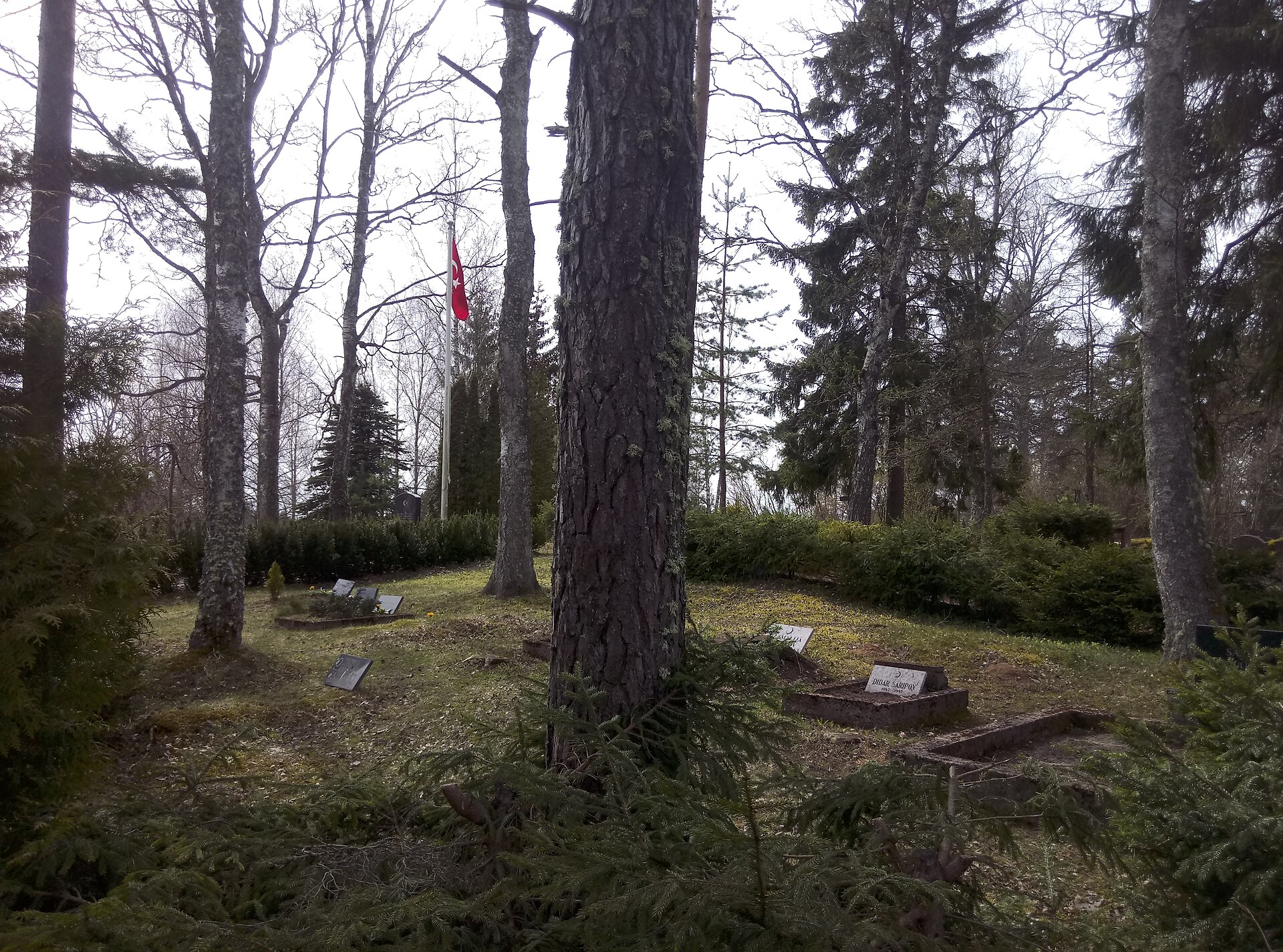
The Rakvere Muslim (Tatar) cemetery. Photo: Robert Treufeldt (CC BY 4.0), Wikimedia Commons.
Municipalisation, 1941
The cemetery belonged to the Muslim religious association. The 1940 Soviet occupation dissolved the associations and the cemeteries were municipalised. The Rakvere cemetery handover act to the communal-economy department of the Rakvere Town Executive Committee is dated 1 April 1941 (a document in Timur Seifullen's private archive). With that the community's burial ground passed into the authorities' hands.
The link to the wider pattern
The Rakvere cemetery belongs to the same story as the Tallinn and Narva Tatar cemeteries and the other Estonian cemeteries razed under the occupation.
See also
Sources: Carl-Dag Lige and Oliver Orro (Muinsuskaitse aastaraamat 2007); Toomas Abiline and Ringo Ringvee, „Estonia” — Muslim Tatar Minorities in the Baltic Sea Region (Brill, 2016), pp. 105–127 (municipalisation, the 1941 Rakvere act).