Old Great Bulgaria
Old Great Bulgaria was a 7th-century state of nomadic peoples on the steppe north of the Black and Azov seas. At its collapse one Bulgar group moved to the Volga and founded Volga Bulgaria — so Old Great Bulgaria is the furthest link of the Bulgar line of the Kazan Tatars and the Mišärs.
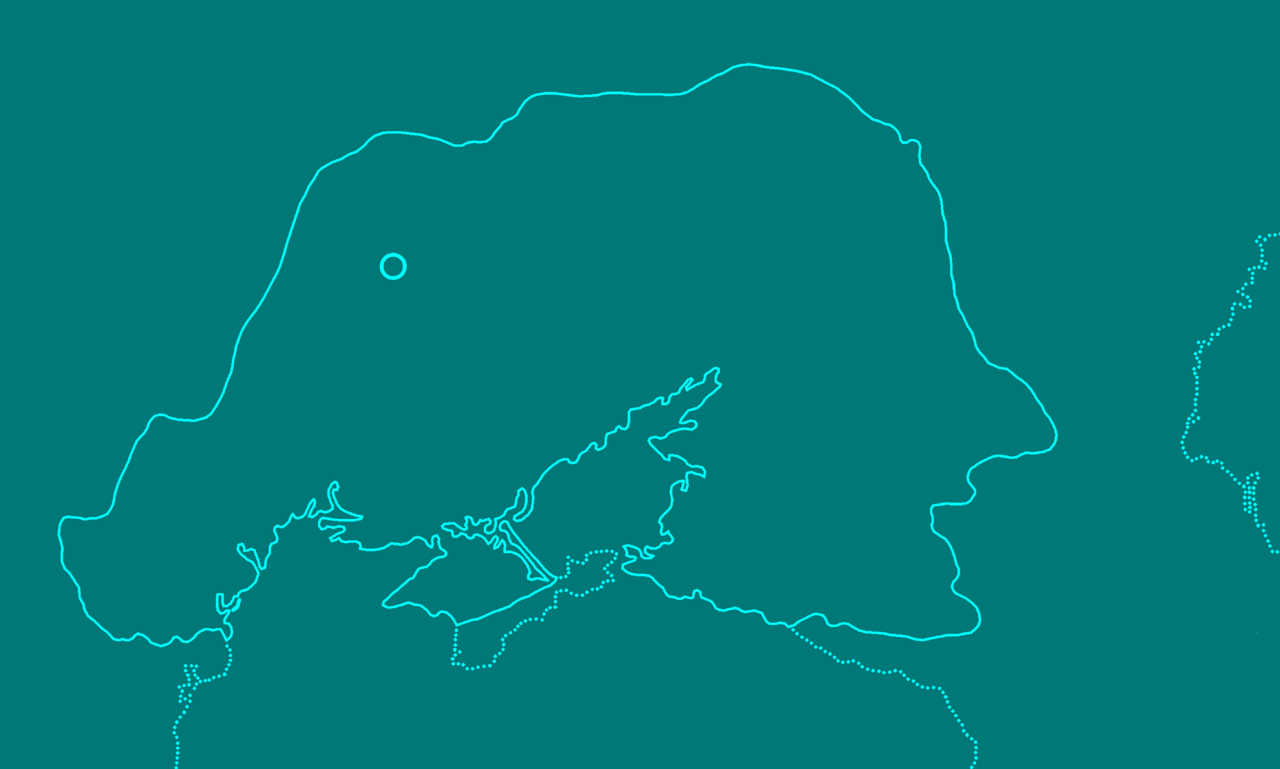
Map of Old Great Bulgaria under Khan Kubrat in the 7th century, around the Sea of Azov and the Kuban River (Apcbg; Public domain; Wikimedia Commons)
Kubrat's state
The state was founded around 632 by Khan Kubrat (of the Dulo clan), uniting the Onogur-Bulgar tribes. Kubrat was raised at the court in Constantinople, baptised as a child and held the Byzantine title of patrician; around 635 he rose against Avar overlordship and made an alliance with Emperor Heraclius. The state's centre was Phanagoria on the Taman peninsula.
Kubrat died around 665. By the Byzantine chroniclers (Theophanes, Patriarch Nikephoros) he charged his sons on his deathbed to stay united, “so they would never become other peoples' slaves.” The famous tale in which the dying khan has his sons fail to break a bound bundle of sticks and then snap them one by one is a later folk elaboration, not documented fact.
The sons' dispersal
After Kubrat's death the state disintegrated under Khazar pressure around 668, and the sons led the Bulgar groups in different directions:
Asparukh went west to the Danube and founded the First Bulgarian Empire (Danube Bulgaria) in the Balkans in 680/681.
Kotrag moved north to the middle Volga — he became the founder and forerunner of Volga Bulgaria.
Batbayan stayed in the old Azov land under Khazar rule; other sons (Kuber, Alcek) went to Pannonia and Italy.
It is this dispersal that explains why the Danube Bulgars and the Volga Bulgars descend from one root — Kubrat's state.
The Bulgars as a people
The Bulgars spoke an Oghur (Oghuric-Turkic) language — the Oghur (Bulgar) branch of Turkic, distinct from Common Turkic, whose only living relative today is Chuvash. They were a semi-nomadic steppe confederation that absorbed Iranian, Uralic and Hunnic elements.
The tie to the Mišärs
The line runs: Old Great Bulgaria → (Kotrag) → Volga Bulgaria, which adopted Islam in 922. In 1236 the Mongols conquered Volga Bulgaria and absorbed it into the Golden Horde. In the Horde the Bulgar elements fused with the Kipchak (Cuman) population, and from this the Volga Tatars formed — both the Kazan Tatars and, within the wider Volga-Tatar grouping, the Mišärs. The Bulgar line is thus one of our two main roots alongside the Kipchak — though for the Mišärs the Kipchak share weighs more heavily.
Sources
This article draws on: Old Great Bulgaria; Kubrat; Bulgars; Volga Bulgaria (English Wikipedia); Bulgaarid (Estonian Wikipedia). Given the legendary character of the bundle-of-sticks story and the “five sons” schema, these are flagged as such in the text. See also this knowledge base's pages: Volga Bulgaria, the Khazar Khaganate and the Golden Horde.