The Khazar Khaganate
The Khazar Khaganate was a great power of Turkic origin that in the 7th–10th centuries ruled the steppes of the lower Volga and the North Caucasus. Its capital was Atil at the mouth of the Volga. The Khazars guarded the southern gate of the Volga trade route and are the oldest link in our story from the pre-Golden-Horde world.
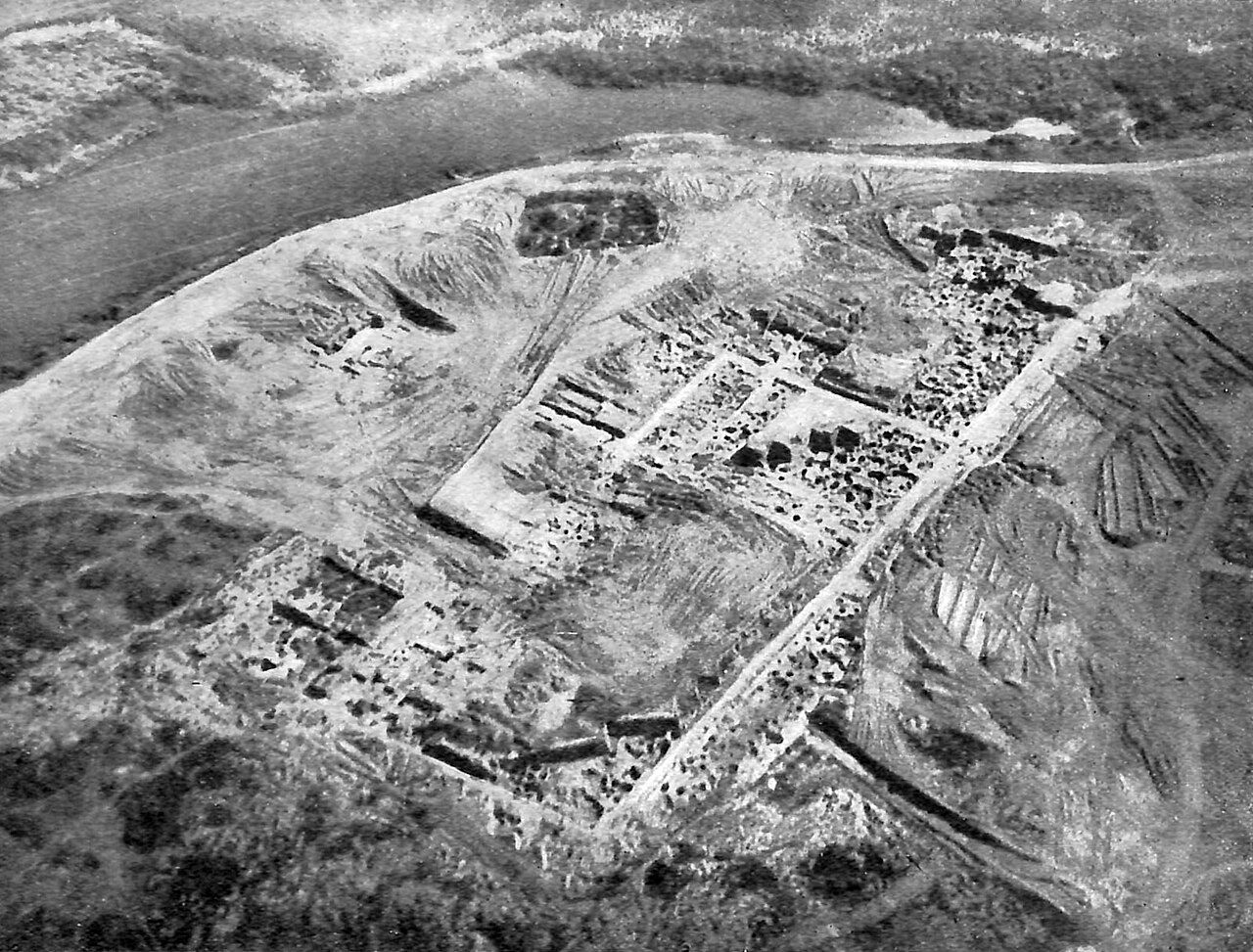
Aerial photograph of the excavations of the Khazar fortress of Sarkel in the 1930s; the fortress stood on the Don River and now lies beneath a reservoir. (Unknown author (aerial photo from the 1930s excavations led by M. I. Artamonov); Public domain (PD-Russia-1996); Wikimedia Commons)
Guardians of the trade route
The khaganate controlled the lower Volga and Don and levied tolls on those using the trade route — among them the Vikings moving down the Volga towards the Caspian. Atil grew into a wealthy trading city where the furs of the north met the silver of the south. The state was religiously mixed: the highest elite adopted Judaism in the 8th–9th centuries, while among the people were Muslims, Christians and pagans.
A buffer between two great powers
Khazaria stood as a buffer between the Arab Caliphate and Eastern Europe and fought long wars with the caliph's forces in the Caucasus. It was behind Khazaria's shield that both Volga Bulgaria's trade and the peoples of the eastern routes could grow. Volga Bulgaria in time freed itself from Khazar overlordship and adopted Islam in 922 partly to gain the caliph as an ally against the Khazars.
Fall
Around 965 Prince Sviatoslav of Kiev sacked Atil and broke Khazar power; the state faded by the 11th century. Khazaria's fall opened the steppe to the Kipchaks and threw the Volga route open to Viking and Volga Bulgar trade — a chain of events that led at last to the Golden Horde and today's Tatar world.
See also
Sources: the Wikipedia articles 'Khazars' and 'Volga trade route'. The dates are historical estimates.