The Cuman Lord's Prayer
The Cuman Lord's Prayer (the Kipchak-language Pater Noster) is the most famous surviving text in the Cuman — that is, Kipchak — language. It is known in two forms: as a written prayer in the 14th-century Codex Cumanicus, and as an oral tradition among the Hungarian Cumans (the “Kun Miatyánk”), which lived on in memory for centuries after the language itself had died out. Because the prayer is a connected text — not isolated words but clause after clause — it shows the grammar of Cuman better than any other fragment.
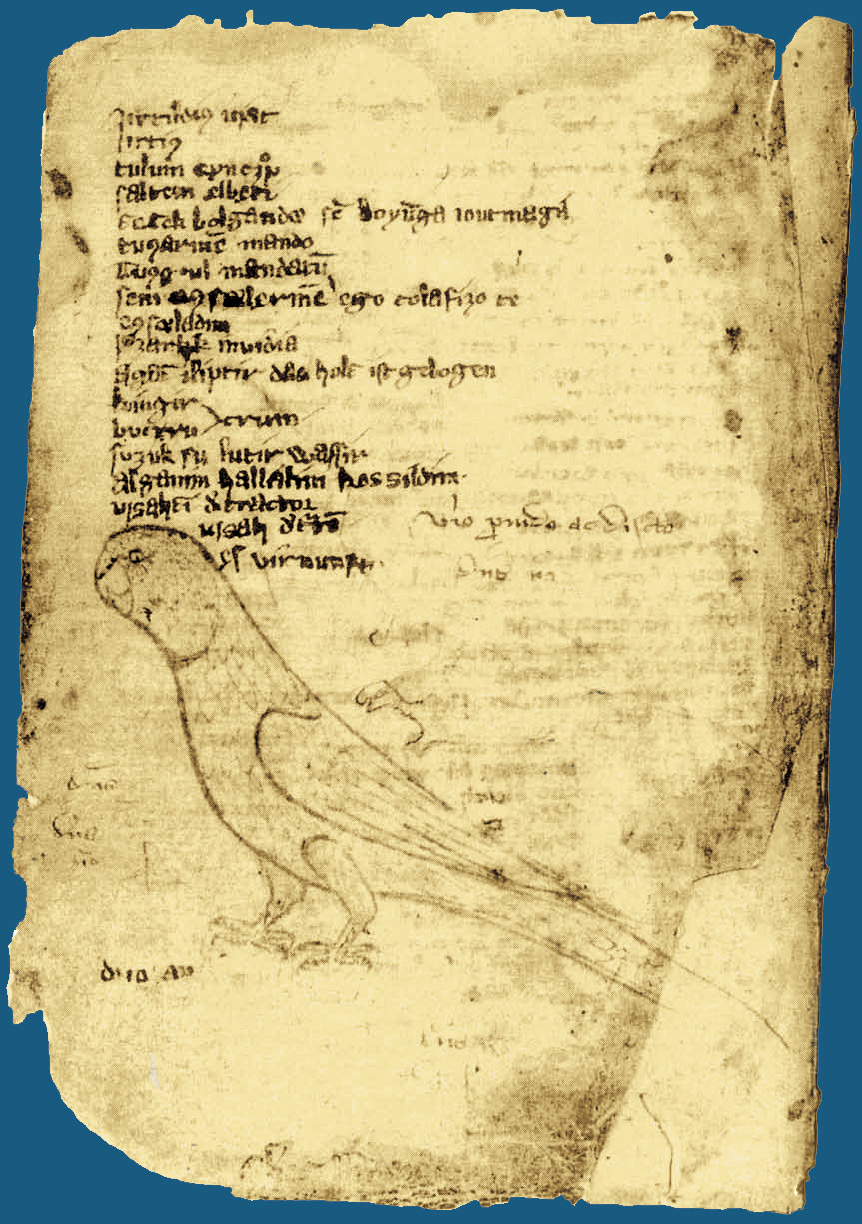
A page from the 14th-century Codex Cumanicus manuscript, which records the Kipchak language — the same codex contains the Cuman Lord's Prayer (Unknown (14th-century manuscript); Public domain; Wikimedia Commons)
The Codex Cumanicus prayer
The “German,” missionary part of the Codex Cumanicus contains sermons, hymns and prayers, among them the Lord's Prayer. In the manuscript itself (page 171 of Géza Kuun's 1880 edition) it stands with medieval abbreviation marks — here expanded:
Atamis kim köctä sen. Algiszle bulsun senig hanlechin. Bulsun senig tilemegin nezik kim kocta alley ierda. Kundegi ötmackimisni bisga bugun bergil. Dage iazuclarmisne bisgä bozzatkil. Nečik bis bozzatirbis bisgä iaman etchenlergä. Dage iecnik sinamakina bisni kuurmagil. Bassa barče iamandan bisni kuthargil. Amen.
In the normalised transcription of modern scholarly editions the same prayer reads:
Atamız kim köktesiñ. Alğışlı bolsun seniñ atıñ, kelsin seniñ xanlığıñ, bolsun seniñ tilemekiñ – neçik kim kökte, alay [da] yerde. Kündeki ötmegimizni bizge bugün bergil. Dağı yazuqlarımıznı bizge boşatqıl – neçik biz boşatırbız bizge yaman etkenlerge. Dağı yekniñ sınamaqına bizni quurmağıl. Basa barça yamandan bizni qutxarğıl. Amen!
The difference between the two forms shows how much medieval scribes' spelling varied: the writers were Italians and Germans who noted Cuman sounds by the habits of their own languages, and scholarly editions only later standardise it. In English the prayer corresponds to the familiar text:
Our Father, who art in heaven, hallowed be thy name. Thy kingdom come, thy will be done, on earth as it is in heaven. Give us this day our daily bread. And forgive us our debts, as we forgive our debtors. And lead us not into temptation, but deliver us from evil. Amen.
In the Estonian Tatar alphabet the same prayer looks as follows — a mechanical orthographic conversion of the normalised transcription (ç → ts is the reading of our ts-dialect), not a Mišär translation:
Atamõz kim köktesing. Algõšlõ bolsun sening atõng, kelsin sening hanlõgõng, bolsun sening tilemeking – netsik kim kökte, alaj [da] jerde. Kündeki ötmegimizni bizge bugün bergil. Dagõ jazuklarõmõznõ bizge bošatkõl – netsik biz bošatõrbõz bizge jaman etkenlerge. Dagõ jekning sõnamakõna bizni kuurmagõl. Basa bartsa jamandan bizni kuthargõl. Amen!
Linguistic features
The language of the prayer is clearly of the Kipchak type, and a few words open up the steppe world behind it:
xanlıq (“khanate, realm”) — “thy kingdom come” is kelsin seniñ xanlığıñ: God's kingdom is rendered with the steppe's own political term, the domain of a khan.
yek (“evil spirit, demon”) — “from evil” is yekniñ sınamaqına… quurmağıl: an old Turkic word for the evil one, inherited from the pre-Islamic Manichaean-Buddhist religion of the steppe.
ötmek (“bread”) and boşat- (“to forgive”) — everyday words belonging to the core vocabulary of all the Kipchak languages.
This is why the prayer matters to us: because Mišär is the closest language to Cuman, much of the vocabulary of this 700-year-old text lives on in Mišär almost unchanged (see the Cuman–Mišär comparison).
The Ave Maria
In the manuscript the Lord's Prayer is followed by the Ave Maria:
Sounčlu bolgil, Maria, söwrgamachbile tolu sen; bey tengri senig bile; barče katunlar arassinda algizlä sen…
— “Rejoice, Mary, full of grace; the Lord God is with thee; blessed art thou among all women.”
The Hungarian “Kun Miatyánk”
Some of the Cumans fled the Mongols in the 13th century into Hungary, to the region of Kunság (Cumania). There they were Christianised and merged linguistically into the Hungarians — Cuman died out in Hungary by the early 18th century. Yet the Lord's Prayer survived in oral tradition in nearly a hundred variants, and was still taught in the schools of Kisújszállás and Karcag as late as 1948.
By tradition the last speaker was István Varró of Karcag (d. 1770), who recited the Cuman Lord's Prayer at the request of the historian Adam František Kollár — in a later retelling, before Empress Maria Theresa's court in 1744. The recorded form is, however, already heavily mixed with Hungarian and is regarded as a Hungarian-Cuman hybrid rather than pure Cuman; the Codex Cumanicus text is therefore the more reliable linguistic source. See more at the Hungarian Cumans.
Sources
This article draws on Géza Kuun's 1880 edition of the Codex Cumanicus (Venice, Biblioteca Marciana), the English and Estonian Wikipedia (Cuman language; Codex Cumanicus), and this knowledge base's pages: Codex Cumanicus, the Kipchak steppe, the Hungarian Cumans and why Mišär is closest to Cuman. The historical prayer texts are given unaltered, as in the primary sources.